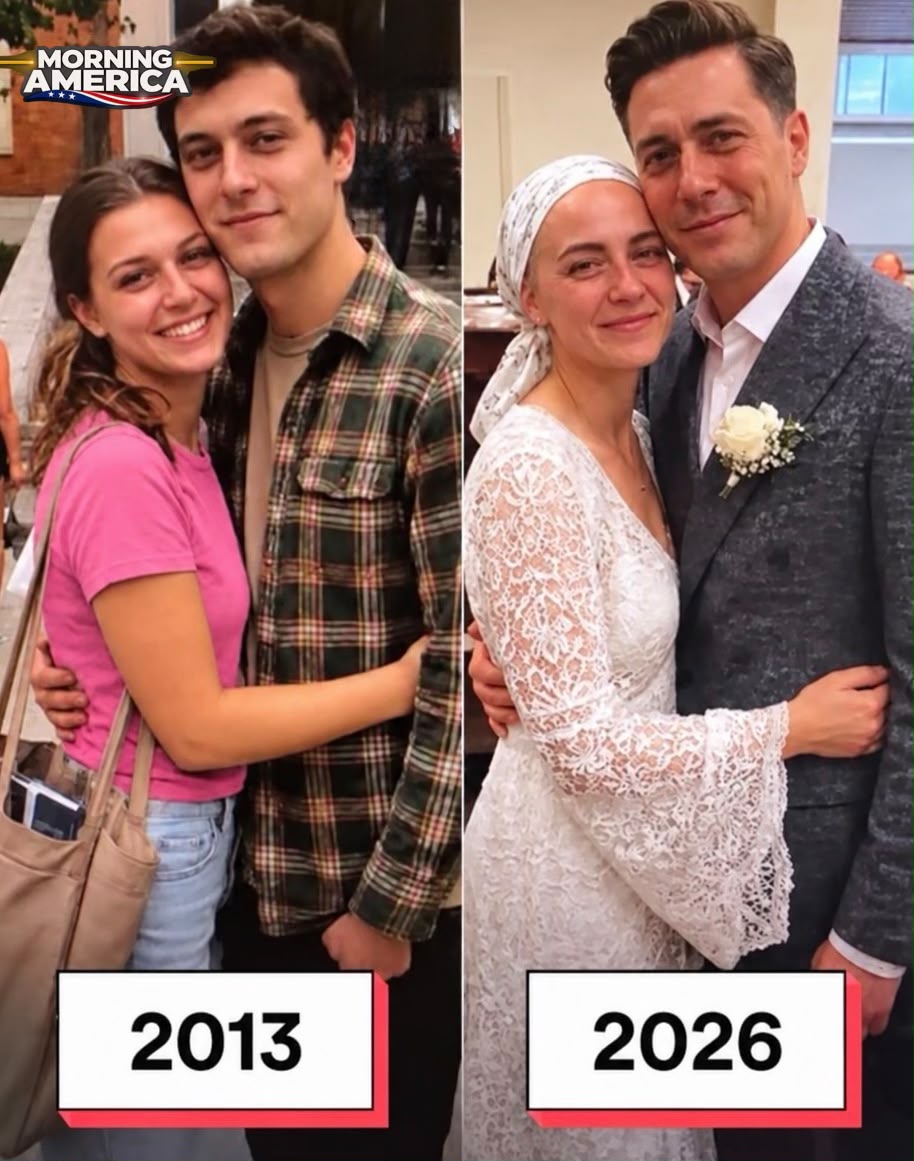
She had taken my seat in a crowded sociology lecture and refused to move.
She looked at my notebook, smiled, and said, “You can sit beside me, but only if your handwriting is useful.”
I sat down.
By the end of that semester, we were inseparable.
For 3 years, Juliet and I studied together, cooked terrible pasta in our tiny apartment, and spent Sunday mornings arguing over crossword clues.
She dreamed of an old house with green shutters and a garden.
I dreamed of graduate school, research, and traveling the world.
We were young enough to believe love would automatically make both dreams fit.
Then, during our senior year, Juliet asked me a question that changed everything.
“When do you think you’d want children?”
I laughed nervously.
“Not for years. Maybe 5 or more. There’s too much I want to do first.”
Her expression changed.
I noticed.
I just misunderstood why.
I thought she was upset because she wanted children sooner.
What I didn’t know was that Juliet had taken a pregnancy test that afternoon.
It was positive.
Instead of telling me, she had tried to find out how I might react.
And my answer terrified her.
Our conversation became an argument.
She accused me of imagining a future that had room for everything except a family.
I accused her of turning one conversation into an ultimatum.
She said I never listened when something mattered.
I told her she was being unfair.
Neither of us apologized.
The next morning, she was gone.
Her clothes had disappeared from the closet.
Her phone had been disconnected.
Her social-media accounts were deleted.
I immediately called her mother, Diane.
At first, Diane refused to tell me where Juliet was.
“She needs time,” she said.
I begged her to put Juliet on the phone.
She wouldn’t.
Years later, I learned Juliet had spent those first days at Diane’s house and had made her promise not to reveal where she was.
Then everything changed.
About a week after leaving me, Juliet began bleeding.
She lost the pregnancy.
Afterward, she shut down completely.
She left her mother’s house, moved several states away, changed her phone number, stayed off social media, and cut almost all contact with our old friends.
Eventually, even Diane knew only that she was alive.
For weeks, I expected Juliet to return.
Then weeks became months.
Months became years.
I finished graduate school.
Changed cities.
Changed jobs.
Dated other women.
But part of me remained trapped in that apartment, staring at the empty half of our closet and wondering what I had missed.
One relationship lasted almost a year.
Claire finally ended it because she understood something before I did.
“You’re still waiting for Juliet,” she told me.
“I haven’t seen her in years.”
“That doesn’t mean you’re not waiting.”
She was right.
Eventually, I stopped actively searching.
There was only so much I could do when Juliet had deliberately removed herself from everyone who might lead me to her.
But I never stopped wondering.
Then, 10 years after she left, my doorbell rang on a rainy Thursday evening.
I opened the door.
And there she was.
Juliet was thinner than I remembered.
Pale.
Unsteady.
One hand gripped the porch railing as though standing required more effort than she wanted me to see.
But I recognized her eyes instantly.
“Hi, Daniel.”
I stared at her.
“Where have you been?”
Her mouth trembled.
“Can I come inside?”
I should have demanded an answer first.
Instead, I stepped aside.
Juliet sat in my living room and looked around at the photographs on my walls.
Then she folded her hands tightly in her lap.
“I’m sick.”
I said nothing.
“Cancer. It spread before they found it.”
The anger inside me went silent.
“How long?”
“The doctors said weeks. Maybe a few months if I’m lucky. They can’t really predict it now.”
I sat across from her.
Then she looked at me and said, “I came to ask you something.”
“What?”
“Marry me.”
I actually laughed.
Not because anything was funny.
Because the question was too absurd to understand.
“You disappear for 10 years, come back dying, and ask me to marry you?”
“I know how it sounds.”
“No. I don’t think you do.”
Tears filled her eyes.
I stood.
“Do you have any idea what you did to me?”
“Yes.”
“You don’t get to say yes.”
“I know.”
“Then why are you here?”
Juliet looked down.
“Because when I picture the end of my life, you’re still the person I want beside me.”
“That isn’t enough.”
“No,” she whispered. “It isn’t.”
For the first time, she didn’t ask me to forgive her.
She only said, “I don’t expect you to.”
I didn’t answer that night.
The next morning, Juliet became weak enough that I had to take her to the hospital.
While we waited for tests, she said quietly, “The night I left, I had just learned something that terrified me.”
I turned toward her.
“What?”
Her eyes filled.
“I want to tell you. I just don’t know how.”
Part of me wanted to force the truth out of her.
But she looked exhausted.
So I said, “If I marry you, it doesn’t mean I’ve forgiven you.”
“I know.”
“It doesn’t erase 10 years.”
“I know.”
“It means I don’t want either of us spending whatever time you have left wondering what would have happened if I said no.”
Juliet cried.
We married the next day at the courthouse.
She wore a simple blue dress.
A clerk found 2 employees willing to act as witnesses.
Juliet was so weak that I kept one arm around her during the vows.
When the clerk pronounced us married, she looked up at me and smiled.
For one second, she looked 20 again.
Then she whispered, “I’m sorry it took me so long to come home.”
We had 5 days.
We ate toast in bed.
Watched old movies.
Laughed about the terrible meals we used to make in college.
At night, Juliet slept against my chest while I listened to every breath.
Twice, she tried to explain why she had left.
The first time, she became too sick to continue.
The second time, she whispered, “I thought telling you would ruin your life.”
“Juliet—”
“I know now how wrong I was.”
She promised to tell me everything the next morning.
There was no next morning.
Juliet died in her sleep before dawn, still wearing my wedding ring.
At her funeral, I stood beside the grave feeling as though I had lost her twice.
After the service, a woman named Naomi Ellis approached me.
“I was Juliet’s roommate and closest friend for the last 7 years.”
She handed me an envelope.
Inside was a brass key and a note in Juliet’s handwriting.
There are 127 letters waiting for you. Read the oldest one first.
I looked at Naomi.
“She wrote to me?”
“For years.”
“Then why didn’t she send them?”
Naomi’s expression tightened.
“Because every time she almost chose courage, fear won.”
Naomi took me to the apartment she had shared with Juliet.
Inside Juliet’s bedroom sat a dark wooden trunk.
The key opened it.
Inside were bundles of letters.
Every envelope had my name on it.
The oldest had been written 3 days after Juliet disappeared.
I opened it.
The first sentence made the room tilt.
Daniel, I’m pregnant.
I stopped breathing.
Juliet wrote that she had learned the truth only hours before our argument.
She was scared.
She didn’t know if she was ready to become a mother.
She didn’t know what she wanted.
And when I talked about graduate school, travel, and waiting years for children, she convinced herself that telling me would force me to sacrifice everything.
So she ran.
She intended to stay with her mother only a few days.
Then she planned to come home and tell me.
But about a week later, she miscarried.
The next letter had been written from a hospital room.
One sentence was underlined twice.
I lost our baby. Then I lost myself.
I sat there staring at those words.
“She should have told me.”
“Yes,” Naomi said.
No excuses.
No attempt to defend her.
The later letters showed how one terrible decision became 10 years of silence.
At first, Juliet was drowning in grief.
Then she became ashamed.
After a few months, she believed I would hate her.
After a year, she thought too much time had passed.
After several years, she convinced herself that returning would only destroy whatever life I had built without her.
Every year made the next year harder.
The letters repeated the same promises.
I will call tomorrow.
I bought a train ticket.
I found his office number.
I made it halfway there.
But she never followed through.
Then I found letters proving she had known where I lived.
My anger came back immediately.
“She knew?”
“Yes.”
“She knew I’d been looking for her?”
“Eventually.”
“And you let her keep doing this?”
Naomi didn’t flinch.
“I tried to stop her.”
“How?”
“I bought her a train ticket once. She didn’t use it. Another time, I drove her to your city.”
I stared at her.
“What happened?”
“She made me stop 2 blocks from your apartment.”
Naomi had even threatened to contact me herself.
Juliet begged her not to.
“She kept saying she had no right to force herself back into your life,” Naomi said.
“And what did you tell her?”
“That whether you wanted her back wasn’t her decision to make.”
I looked away.
At least someone had told Juliet the truth.
The letters revealed that she had come close to me twice.
Once, she spent hours in a diner near my office, dialing most of my phone number before hanging up.
Another time, she walked all the way to my apartment building.
That was when she saw Claire and me entering together.
Juliet assumed I had finally moved on.
So she turned around.
“Claire left me because I couldn’t let Juliet go,” I said quietly.
Naomi lowered her eyes.
“Juliet never knew.”
A few days later, Naomi took me back to our old college campus.
Juliet had visited shortly before coming to my house.
She had walked through the places we once loved, then hidden a sealed metal tin behind a loose brick at the greenhouse.
“She put it there only a few weeks ago,” Naomi said. “In case she couldn’t tell you herself.”
Inside was an ultrasound photograph.
Our child.
The child I had never known we had lost.
Beneath it was Juliet’s final letter.
She wrote that when the doctors told her she was dying, her first instinct had been to disappear quietly again.
Then she realized fear had made almost every important decision in her adult life.
Fear had kept her from telling me about the pregnancy.
Fear had kept her away after the miscarriage.
Fear had turned months into years.
She refused to let fear choose how she died too.
So she came back.
Not because she expected forgiveness.
Not because she believed 5 days of marriage could repair 10 lost years.
But because after imagining every possible version of the end, I was still the person she wanted beside her.
Near the bottom, she had written:
Those 5 days were never meant to replace the 10 years I stole from us. They were simply the only honest days I had left to give you.
Then one final line:
I loved you badly, Daniel. I wish I had loved you bravely.
I read all 127 letters over the next several weeks.
Some made me miss her so badly I could hardly breathe.
Others made me furious.
Eventually, I stopped trying to turn Juliet into either a villain or a victim.
She loved me.
She hurt me.
Both things were true.
Her grief explained some of her choices.
It did not erase what those choices cost.
Months later, I contacted our old university.
With the student-support office, I created a small emergency fund for students facing pregnancy, serious illness, medical expenses, or unsafe living situations without enough support.
I called it the Open Door Fund.
I didn’t name it after Juliet.
I wasn’t trying to turn her suffering into a memorial.
I wanted there to be somewhere a frightened person could go before silence became easier than asking for help.
About a year after Juliet died, I reviewed an application from a 20-year-old student named Sophie.
She was pregnant.
Her family had threatened to cut her off financially.
At the bottom of the form, beneath Anything else we should know?, she had written:
I don’t know who I can safely tell.
The committee approved her request.
When I met Sophie in the student-support office, her hands wouldn’t stop shaking.
“Am I in trouble?” she asked.
“No.”
“Did I fill something out wrong?”
“No.”
I handed her the paperwork.
“You can stay enrolled. Some of your medical and living expenses will be covered, and you’ll have access to confidential counseling.”
She stared at me.
“I don’t know what I’m going to do.”
“You don’t have to know today.”
Her eyes filled.
“I don’t even know who I should tell.”
For a moment, I remembered Juliet at 20, standing in our kitchen with a dish towel clenched in her hands, trying to ask me about children because she was too frightened to say what was really happening.
I couldn’t go back and answer that moment differently.
I couldn’t reclaim the chance to grieve the child I hadn’t even known we’d lost.
I couldn’t recover the decade fear had taken from us.
But I could decide what happened next.
So I told Sophie what I wished someone had been able to make Juliet believe all those years ago.
“You don’t have to decide everything by yourself.”
And that was when I finally understood that closure wasn’t forgiving everything.
It wasn’t forgetting.
It wasn’t pretending 5 final days could make up for 10 years of silence.
It was accepting that Juliet had loved me and failed me at the same time.
And choosing not to let fear write the ending for anyone else.