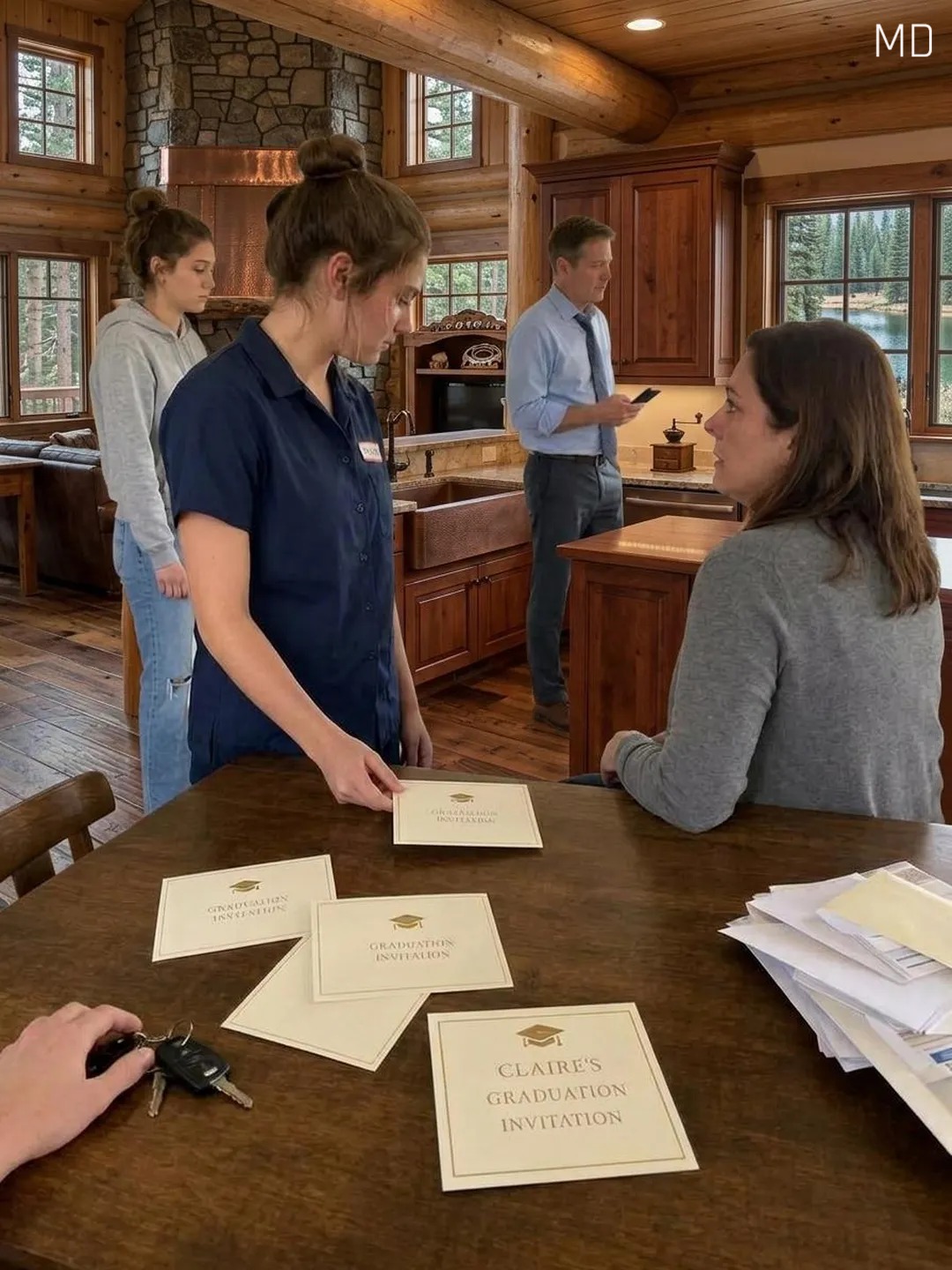
Claire had spent most of her life learning how to become invisible inside her own home. While her younger sister Amber received constant attention and protection, Claire quietly worked hard, earned top grades, and carried responsibilities without asking for recognition. When she received a full scholarship to Stanford University, she kept the news mostly to herself, afraid her success would once again become a problem for the family dynamic. Her fears proved true when her parents decided to cancel her graduation celebration because Amber felt uncomfortable seeing so much attention focused on someone else. Claire said nothing at first, but deep inside she realized she could no longer continue shrinking herself to make others comfortable.
The only person who had always understood her was Aunt Linda, a woman the family often described as difficult simply because she spoke honestly. Since Claire was a child, Aunt Linda had mailed her birthday cards with small messages encouraging her to build her own future and never apologize for her ambitions. One evening, after the graduation party was officially canceled, Claire wrote Aunt Linda a letter explaining everything — the scholarship, the years of sacrifice, and the loneliness she had quietly carried. She asked one simple question: if things became too painful at home, could Aunt Linda help her leave? That letter became the beginning of a new chapter in her life.
When Claire’s parents discovered the letter and the carefully organized documents on her desk, the truth they had ignored for years finally became impossible to avoid. Claire showed them the savings she had built from working weekends, the applications she had paid for herself, and the plans she had quietly made to leave home. For the first time, her family saw how much she had accomplished without support. Even Amber, standing silently in the hallway, began to understand the damage caused by years of imbalance inside their household. The next morning, Aunt Linda drove through heavy rain to pick Claire up and take her to the future she had fought so hard to reach.
Life at Stanford was not easy, but it changed Claire in ways she never expected. Surrounded by people who believed in her abilities, she slowly learned that her voice mattered. Inspired by her own experiences, she later created a support program for first-generation students dealing with difficult family situations. Years later, her parents finally admitted their mistakes, and Amber began trying to rebuild their relationship honestly. Claire eventually returned home for a short visit, not because she needed approval anymore, but because she had finally built a life that belonged entirely to her. For the first time, she understood that the “door” Aunt Linda had spoken about for years was never just an escape — it was freedom, dignity, and the right to choose her own path.