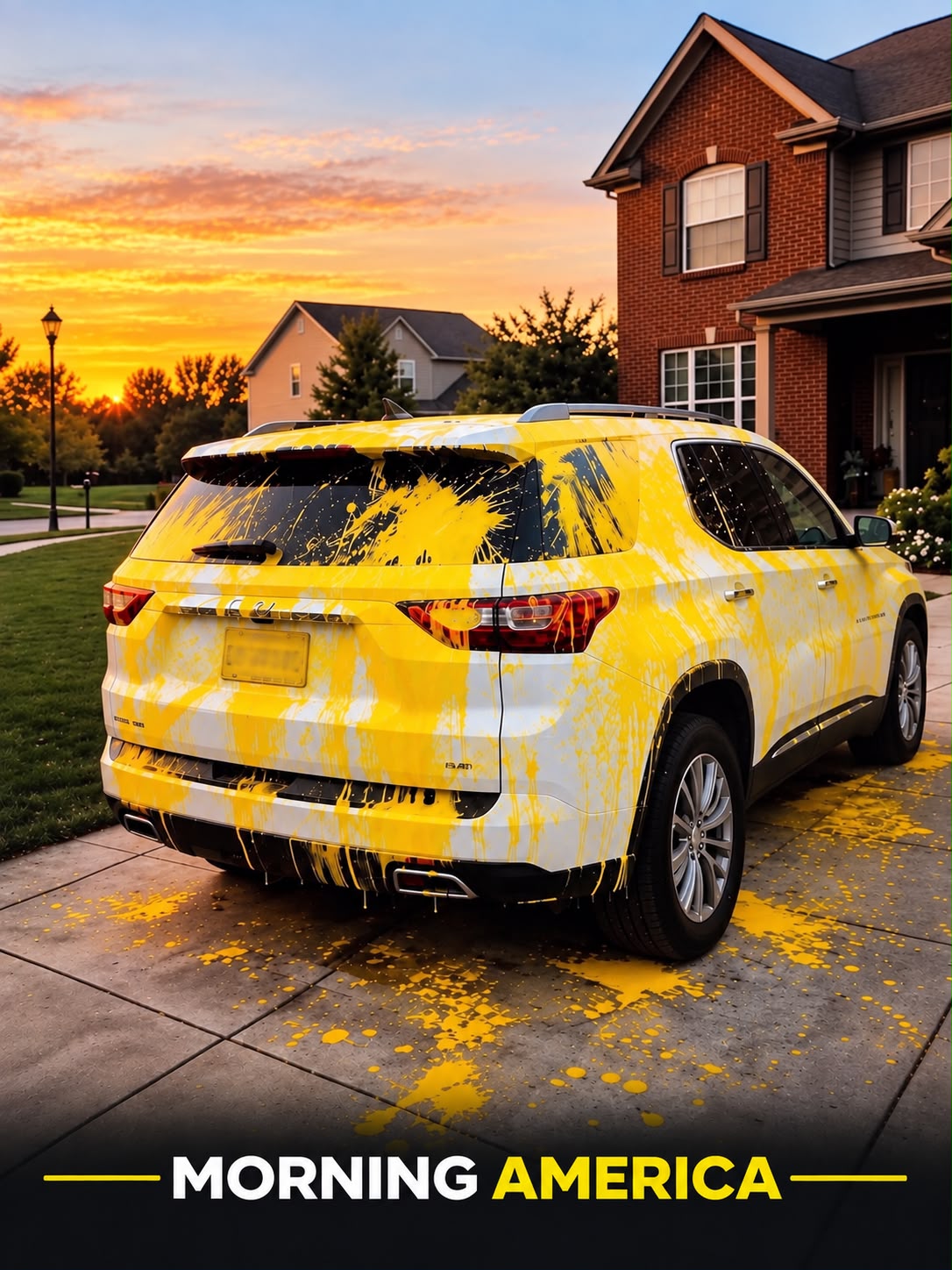
Detective Harris explained that nine-year-old Caleb had been struck by a white SUV while crossing a residential street 15 miles away. The driver fled, leaving investigators with grainy traffic-camera footage showing only the general model and part of a fleet marking. My SUV was seized as evidence while police reviewed its title, insurance history, dealership records, and earlier repairs. Investigators discovered it had been sold cheaply for cash shortly after the collision with “cosmetic damage” on the same rear quarter panel. The previous owner, Darren, worked with a contracting company whose logo matched the markings beneath the paint. After questioning, he admitted he had struck Caleb, hidden the SUV for weeks, and sold it through a dealership that repaired and repainted the damaged area. Darren eventually accepted responsibility through a plea, faced sentencing in court, and finally gave Caleb’s parents the answer they had been denied for six years. My attorney also pursued compensation because I had purchased the vehicle in good faith, and irregularities in the sale and repair records supported my claim against the dealership.
The SUV remained evidence, and I never wanted it returned. Linda pleaded guilty to vandalism and received restitution, fines, and community service, while Tyler served time after accepting a plea involving the stolen construction materials. Months later, Harris told me Caleb’s mother said she could finally stop examining every white SUV she saw on the road. Nothing could restore her son, but uncertainty had been its own form of suffering, and now the family had a name and accountability. I eventually bought an ordinary gray sedan with good mileage and stayed in the same house, though Linda and I rarely exchanged more than a distant nod. She had poured paint over my car intending to punish me for enforcing a property boundary. Instead, that paint stripped away a hidden layer, exposed evidence, and helped close a case that had haunted a family for six years.