“Rachel, please.”
I turned.
Dr. Bennett was hurrying toward me with a plain cream envelope in his hand.
“Jonah gave this to me 3 weeks ago,” he said.
I stared at it.
“What is it?”
“There’s something he made me promise not to give you until after he was
gone.”
My stomach tightened.
“Why?”
“He believed you might need it later.”
“That doesn’t answer my question.”
“I know.” Dr. Bennett held out the envelope. “He asked me to let the contents
explain.”
I took it.
My name was written across the front in Jonah’s uneven handwriting.
Rachel.
That was all.
“He also said you didn’t have to open it today,” Dr. Bennett added.
A bitter laugh escaped me.
“That’s generous of him.”
Then I walked away carrying the final secret my husband had kept from me.
Two months earlier, secrets had not been part of our marriage.
Baby names had been.
“Absolutely not,” I told Jonah.
“You rejected it too quickly.”
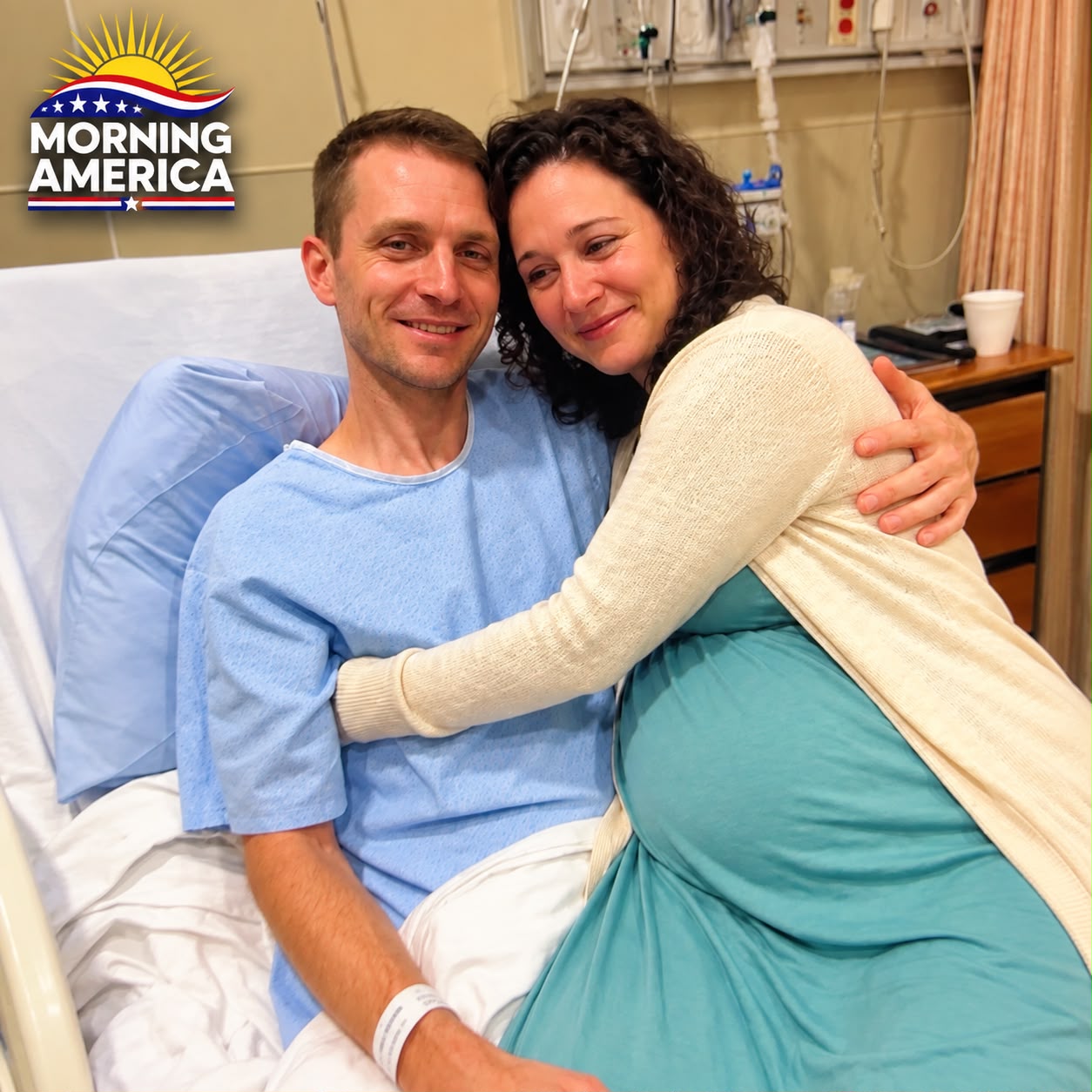
We were sitting on the back porch with his hand resting on my 6-month belly.
“You suggested Clementine.”
“It’s a strong name.”
“For an orange.”
Jonah laughed, though the sound caught slightly in his chest.
“Fine. What about Elodie?”
I looked at him.
“Elodie?”
“My grandmother used to sing a song with that name.”
“You said your grandmother sang everything badly.”
“She did, but it made you smile.”
“Elodie,” I repeated.
The baby kicked beneath his hand.
Jonah’s eyebrows lifted triumphantly.
“See? She voted.”
“She kicked you.”
“Strong approval.”
This time, when I said the name again, it sounded like our daughter’s.
We had waited years for her. Then, at 24 weeks pregnant, our happiness was
shattered when Jonah collapsed at work.
The doctors discovered an aggressive illness that had already progressed
beyond what treatment could cure. They could keep him comfortable and
perhaps give him a little more time, but they warned us that he probably would
not live long enough to meet our daughter.
A few evenings later, Jonah brought up do:nation.
“If anything is medically suitable when the time comes, I want to do:nate it.”
“Please don’t talk about dying while she’s kicking.”
“That’s exactly why I have to.”
“Jonah-”
“My illness may rule out solid or:gans, but they might be able to use my
corneas, skin tissue, or something else. Maybe someone will see their child’s
face again. Maybe someone will heal after a terrible injury.”
“It won’t make losing you hurt less.”
“I know. But my de:ath doesn’t have to be only the worst thing that ever
happened to you.”
“I don’t know how to do this without you.”
“You don’t have to know yet.”
“What if I never know?”
“Then you’ll make it up as you go.”
“That’s a terrible plan.”
“It’s the only honest one I’ve got.”
That night, I promised to honor his decision.
I had no idea that promise would eventually turn me into the villain of someone
else’s grief.
Jonah’s mother, Marianne, had always treated me like a daughter. She brought
groceries during my morning sickness, helped us paint the nursery, and bought
our baby yellow socks because she claimed the child would otherwise “drown in
pink.”
But the first time Jonah mentioned do:nation in front of her, Marianne went pale.
“You agreed to this?” she asked me after the coordinator left.
“It’s what Jonah wants.”
“I asked whether you agreed.”
“Mom,” Jonah interrupted, “it’s my decision.”
“You’re sick. You shouldn’t have to think about this.”
“I’m dying. That’s why I have to think about it.”
“Don’t say that.”
“Pretending won’t change it.”
Marianne looked at me again. I saw fear in her expression, followed by
something sharper.
Blame.
Then she picked up her purse and left.
As Jonah grew weaker, Marianne repeatedly asked him to withdraw his consent.
One morning, while I helped him button his shirt, he caught my wrist.
“My mother brought up the do:nation again.”
“I’ll talk to her.”
“No.”
“Why?”
“She needs someone to blame, and I don’t want that person to be you.”
“She loves you.”
“I know. But love doesn’t always make people fair.”
A few weeks later, Jonah began asking to speak with Dr. Bennett alone.
“Something I need to handle.”
“Without me?”
“Yes, but it’s for you.”
“That somehow makes it worse.”
“Please trust me.”
I did, so I left the room.
I hated not knowing, but Jonah had lost control over almost everything. If
handling one final matter privately gave him some control back, I could allow it.
Jonah di:ed on a rainy Tuesday morning with my hand wrapped around his.
Shortly before sunrise, he opened his eyes.
“Rachel?”
“I’m here.”
His gaze moved to my stomach.
“Elodie?”
“She’s here too.”
I placed his hand over our daughter. As if she understood, she shifted beneath
his palm.
“You’ll make it up,” he whispered.
I knew what he meant.
As you go.
“Yes,” I promised.
He di:ed less than an hour later.
The do:nation coordinator explained that his illness prevented solid-or:gan
do:nation, but his corneas and some other tissue were medically suitable. I
answered the required medical-history questions and signed the necessary
acknowledgments.
Whenever anyone asked if I was certain, I gave the same answer.