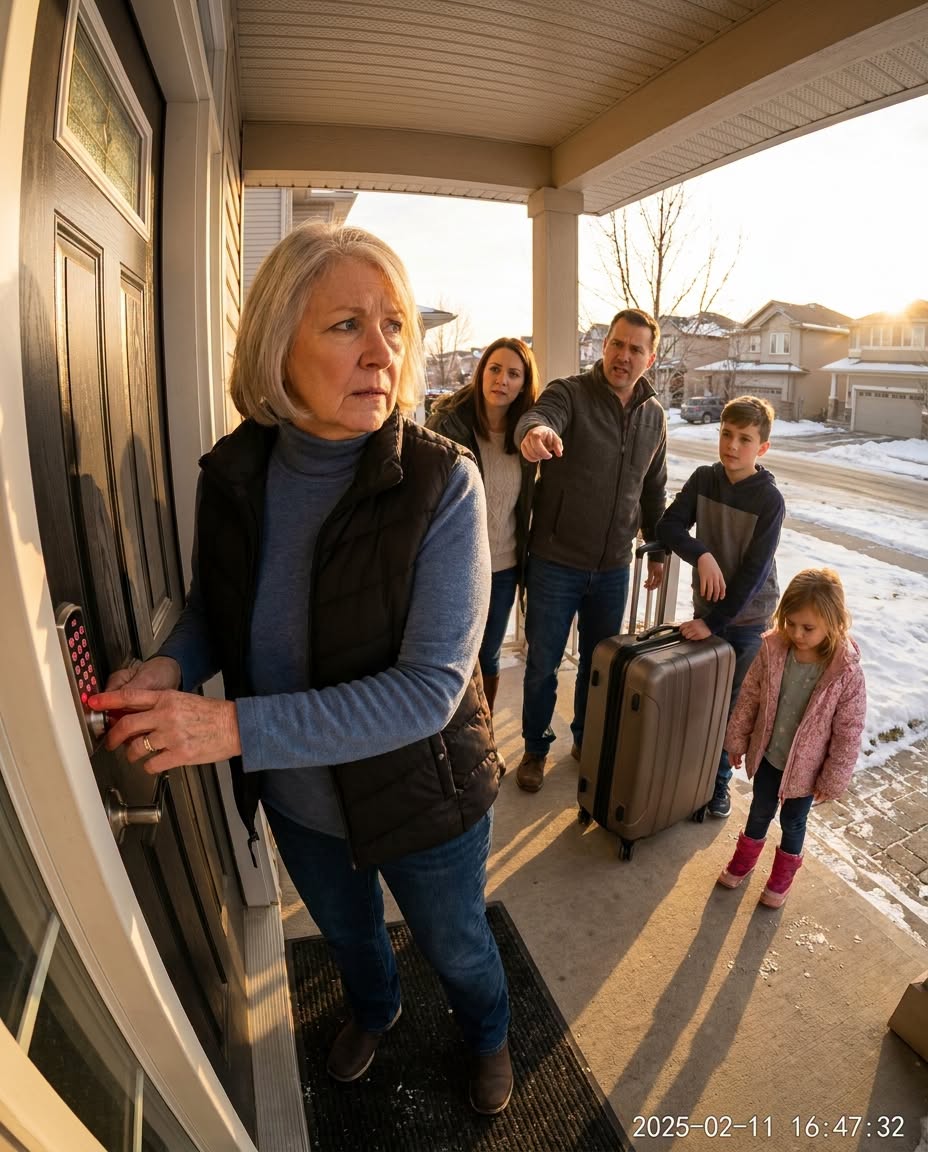
The first time Victoria demanded our house for New Year’s weekend, she said it as though she were confirming a reservation. Her sister, brother-in-law, four adult children, and two grandchildren were flying in, she explained, and our three-bedroom house was “perfect” for all ten of them. Jordan and I had already planned to spend the holiday at home for our anniversary, but his mother waved that aside and told us to rent a hotel instead. Then she instructed me to leave a key under the mat, stock the refrigerator with breakfast food, and make sure the house was ready by Thursday afternoon. I looked at her and said only, “I’m away.” She smiled as if she had won. What she did not understand was that I meant exactly what I said.
For three years, Jordan had struggled to say no to his mother. Victoria treated our home like an extension of her own life, dropping in without warning, bringing friends to stay, borrowing things without asking, and once even giving spare keys to neighbors. Jordan apologized to me afterward but rarely challenged her directly. Financially, I had put down most of the purchase price and paid the larger share of our ongoing household costs, but Victoria still behaved as though the property belonged primarily to her son and I was merely occupying it. Three weeks before New Year’s, I had secretly booked an oceanfront spa cabin as an anniversary surprise for Jordan. After watching him sit silently while his mother ordered us out of our own home, I changed the plan. I packed my suitcase, told him he could manage whatever arrangement he had allowed Victoria to make, and drove to the coast alone. Before leaving, I also secured the house exactly as I normally did before an extended absence: the smart locks, security system, garage access, and exterior gates were all placed into their away settings.
At two o’clock Thursday afternoon, Victoria arrived with two minivans full of relatives and luggage. There was no key beneath the mat. Her old keypad code failed, then locked the system after repeated attempts. Jordan, who had ended up in a cheap motel because he had made no real plan for himself, called me in a panic and asked me to unlock the front door remotely. I refused. Victoria then summoned a locksmith, but he would not bypass a residential security system without proof that she lived there or had authority from the owner. By nightfall, temperatures had dropped, relatives were furious, and the free family weekend Victoria had confidently promised was collapsing around her. With no other option, she booked several hotel rooms at holiday rates and paid more than two thousand dollars out of pocket. While she dealt with the consequences of assuming someone else’s home was hers to allocate, I spent the weekend exactly where I had planned to be: reading by a fireplace, walking the beach, and enjoying the first uninterrupted quiet I had experienced in months.
When I returned Monday, Jordan looked exhausted enough to have finally understood what his avoidance had cost. I told him plainly that the problem was larger than one disastrous weekend. His mother had felt entitled to remove me from a home I substantially funded because she had learned, over years, that he would protect her comfort before he protected our boundaries. I placed two documents on the table: registration materials for marriage counseling and a proposed postnuptial agreement. The purpose was not theatrical punishment but clarity around finances, property access, and future decision-making. Any enforceable postnuptial arrangement would still require proper legal review, voluntary consent, and compliance with applicable law, but the principle behind it was simple: Victoria would no longer receive unrestricted access to our home, our finances would be clearly separated, and another serious boundary breach would force us to reconsider the marriage itself. Jordan agreed to counseling and, for the first time, stopped framing his mother’s behavior as harmless family tradition.
The months that followed were quieter, though not instantly easy. Victoria demanded apologies at first, then discovered that Jordan was no longer willing to provide them on my behalf. He told her she could not enter our home without permission and that disrespect toward me would have consequences for their relationship. Therapy did not erase three years of resentment, but it finally gave Jordan and me a place to address the real pattern beneath it: his fear of disappointing his mother and my exhaustion from compensating for that fear. I kept the same house, the same career, and the same marriage, but the terms inside them changed. What I remember most about that New Year’s is not Victoria standing outside a locked door. It is the moment I stopped rearranging my life to make someone else’s entitlement easier to manage. A home feels different once you know the people entering it understand that being family is not the same thing as having a key.