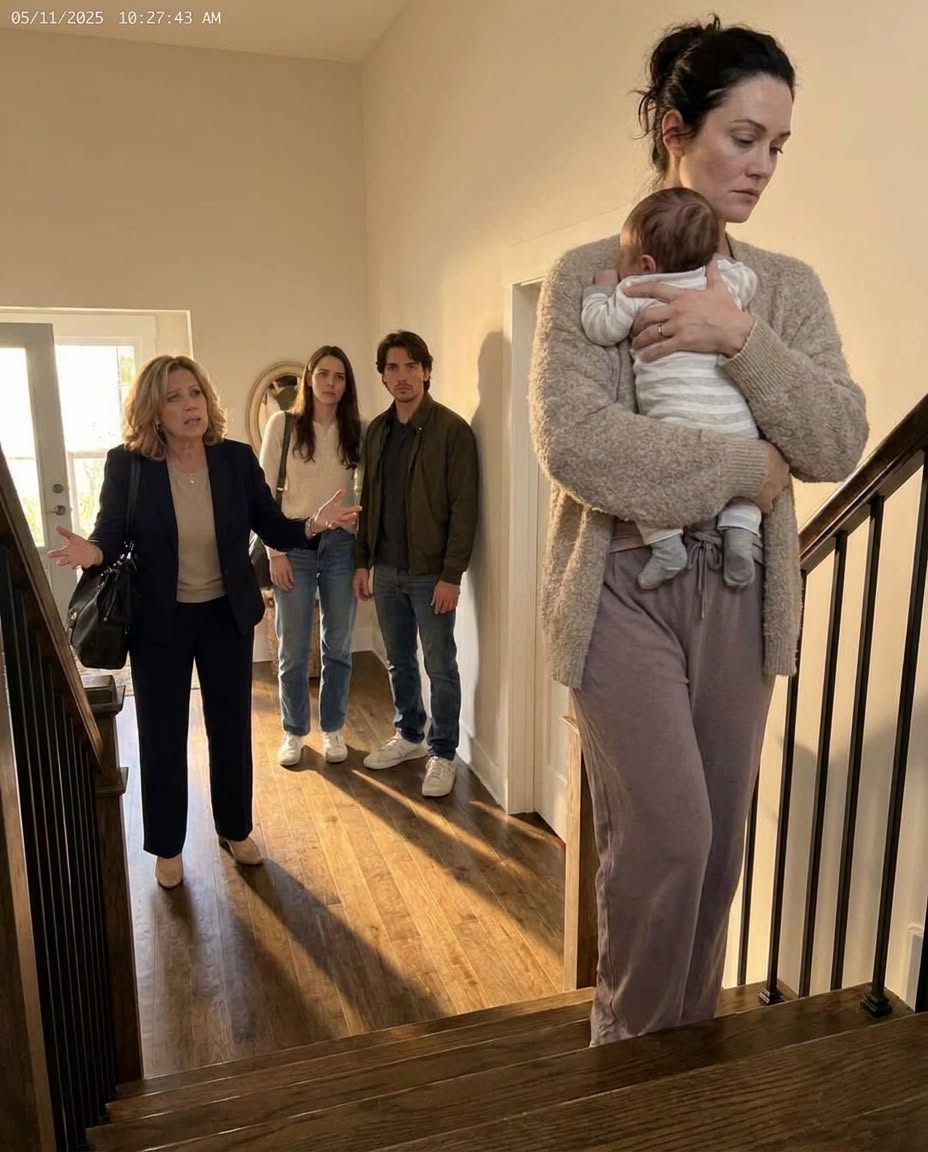
The doorbell rang at exactly ten in the morning, and when I opened it, my mother was standing there with my sister, her husband, and two large suitcases already waiting on the porch. I was six weeks postpartum, still exhausted, still healing, and holding my newborn daughter Lily against my chest. My mother stepped past me without waiting to be invited and announced that she and my father would take the master bedroom while my sister’s family moved into the guest rooms. Isabella ran a hand along the staircase and smiled as though she were touring a property she had just purchased. “This is much better than our apartment,” she said. “Thanks for being so generous.” I closed the door quietly behind them and told them I was not packing anything. They had arrived expecting me to surrender the house; what they did not know was that two weeks earlier, I had already placed it beyond their reach.
The officers reviewed the property documents and trust paperwork I had prepared in advance. Once the legal ownership structure was established, they told my family plainly that they had no right to enter without permission and that refusing to leave could expose them to trespass consequences. They were escorted from the property. Two months later, my mother filed a civil claim arguing that the home should be treated as family property, but the documentary record was straightforward: I had purchased the property, transferred it into a valid trust before the dispute, and retained the relevant banking, conveyancing, and trust records. My lawyer also produced the threatening messages and the police report from the attempted entry. The court upheld the trust and rejected my mother’s claim, leaving the house protected for Lily’s benefit. More important than the judgment itself was what the process forced me to understand: legal boundaries work best when they are supported by practical ones. I changed the locks, stopped explaining my financial decisions to relatives who believed they were entitled to them, and ended the habit of treating family pressure as something I was obligated to negotiate.
The house eventually became what I had intended from the beginning—a quiet place where Lily could grow without other people deciding what belonged to us. I planted lavender in the backyard, filled the nursery with drawings and books, and rebuilt a life whose routines belonged to the two of us. Some relatives disappeared after the court case, and for a while that loss hurt more than I expected. But the silence that followed was different from loneliness. It was the absence of people who had confused access with ownership and kinship with entitlement. I still think about the morning my mother arrived carrying suitcases and confidently told me to leave the home I had bought for my daughter. At the time, it felt like one more thing being taken from me after Daniel’s death. Instead, it became the moment I stopped letting grief and family obligation weaken the boundaries around the life I was building. Lily will inherit more than a house someday. I hope she also inherits the certainty that a home is supposed to be the place where she is safe enough to say no.