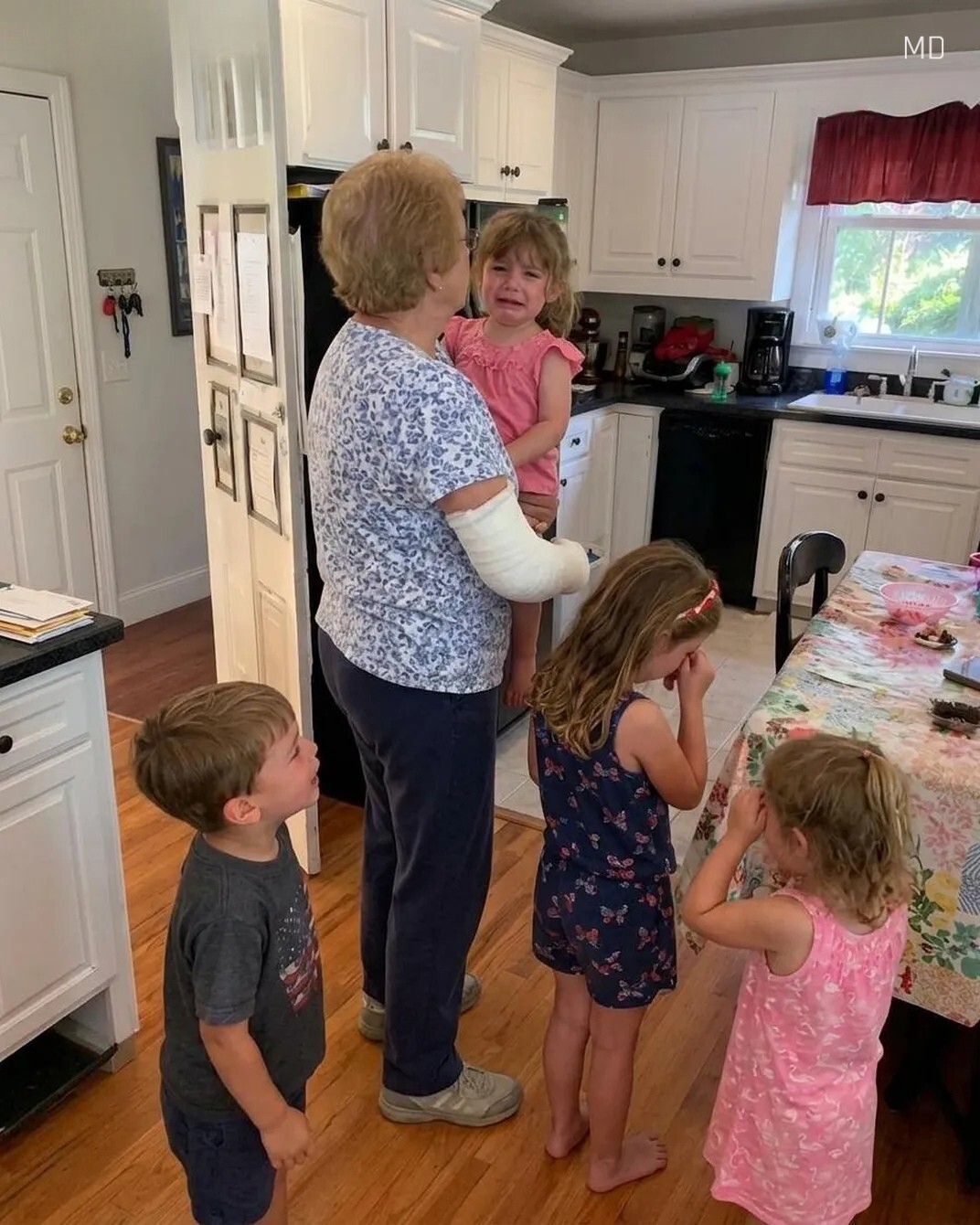
When my 68-year-old mother came to stay with us after arm surgery, my only concern was helping her recover. The doctor had given strict instructions: no lifting, no housework, and plenty of rest for at least eight weeks. My husband, Carl, assured me he was happy to have her with us. With four children, full-time jobs, and our trusted nanny, Nina, helping with daily routines, I believed we had everything under control. My mother spent her first evening apologizing for needing help, while I reminded her that her only responsibility was to focus on healing.
The next day, however, I received a call from our daughter’s daycare saying no one had arrived for pickup. Panicked, I rushed there and discovered that Carl had fired Nina without telling me. When I confronted him, he casually explained that since my mother was now living with us, she could take over childcare responsibilities. I was stunned. My mother had just undergone surgery and was barely managing everyday tasks with one arm, yet Carl seemed to view her recovery as a convenient solution to save money. Even worse, he had informed Nina that we had both agreed to the arrangement, which was completely untrue.
That evening, I found my mother struggling to cook dinner and manage household tasks while the children needed attention all around her. Meanwhile, Carl sat comfortably on the couch, unaware of how much pressure he had placed on someone who was supposed to be resting. Realizing the situation could not continue, I booked a temporary extended-stay hotel for my mother, the children, and myself. I rehired Nina, arranged childcare, and created a recovery plan that prioritized my mother’s health. Carl was upset by my decision, but I wanted him to understand that kindness should never be mistaken for obligation and that family support should never come at the expense of someone’s well-being.
Over the next few days, Carl had time to reflect on what had happened. The turning point came when our oldest child quietly asked why Grandma had been crying while trying to fold towels with one hand. Hearing that question forced him to see the situation through a different lens. He apologized sincerely to my mother and agreed to a clear plan that included restoring Nina’s position, sharing parenting responsibilities, and ensuring my mother would not be expected to handle childcare or chores during her recovery. When we finally returned home, the atmosphere felt different. My mother was able to heal in peace, the children enjoyed spending time with her without burdening her, and Carl learned an important lesson: caring for others means respecting their limits, not taking advantage of their generosity.