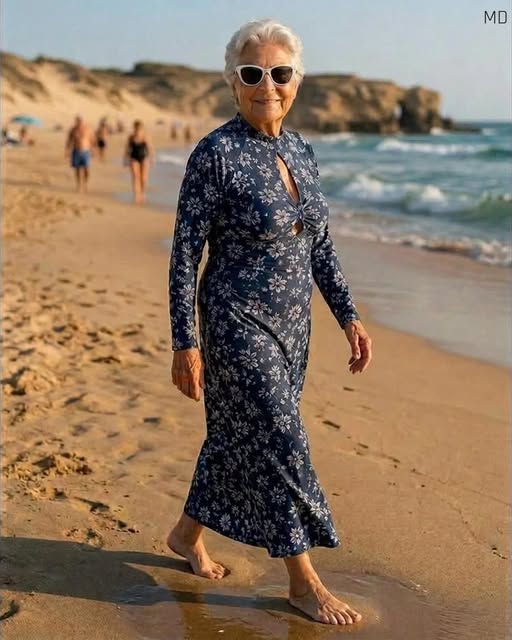
Nora stepped onto the Florida sand in a navy blue bikini, her hands trembling slightly beneath the white cover-up she had almost refused to remove. The beach house her son Daniel rented cost $2,400 for four days, with two umbrellas, coolers full of snacks, and grandchildren who arrived carrying phones, earbuds, and opinions sharper than seashells. The night before, her granddaughter Ava had seen the swimsuit on the bed and whispered, “People are going to stare,” while Tyler stood beside her looking embarrassed. Daniel and his wife Megan heard it too, but neither corrected them. Nora had survived widowhood, bills, illness, and raising a family, but that small silence cut deeper than she expected. Still, she remembered her late husband Frank’s words from hospice: “Don’t disappear just because I do.” So she folded the cover-up, placed it on her towel, and let the sun touch skin she had spent years apologizing for.
For a moment, nothing happened. Children shouted in the waves, a football flew through the air, and the world kept moving as if an older woman in a swimsuit was not a scandal after all. Then Nora noticed a gray-haired man a few yards away staring in her direction, whispering to his wife before standing and walking straight toward the family. Ava murmured, “I told you,” and Nora felt her stomach drop. She expected a comment, a joke, maybe some awkward kindness that would still feel like humiliation. Instead, the man stopped in front of her and said, “Nora?” His name was Richard, and he had waited more than forty years to tell her something her grandchildren were not ready to hear.
Richard explained that when he was fifteen, older boys at a community pool mocked his body until young Nora stepped in and told them, “Funny people make others laugh. Cruel people just make noise.” He said that one sentence changed the way he saw himself for the rest of his life, more valuable than any attorney’s advice, insurance policy, mortgage payment, investment return, estate plan, or court judgment could ever be. His wife added that he had told the story throughout their marriage, always describing Nora as the woman who taught him shame belonged to the mockers, not the person brave enough to be seen. The grandkids went quiet. Ava looked at the sand, Tyler swallowed hard, and Chloe’s eyes filled with tears. Nora walked into the ocean afterward, letting the saltwater hold her, while her family sat behind her finally understanding what their words had done.
The next morning, Nora brought out old vacation photos of Frank in ridiculous swim trunks, babies on hips, beach hair, soft bodies, crooked smiles, and memories no one had edited for approval. She told the grandchildren they were going to recreate the pictures, and despite groans and dramatic complaints, they ended up laughing harder than they had all week. By afternoon, Ava apologized in front of everyone, admitting she had been more afraid of online judgment than of hurting her grandmother. Tyler and Chloe apologized too, and Nora hugged them because love sometimes means teaching without turning the lesson into a punishment. That evening, Ava posted a recreated beach photo of Nora in her bikini, standing proudly with all three grandchildren posing beside her. The caption read, “Our grandma is cooler than all of us,” and when Nora asked if she was worried people would stare, Ava smiled and said, “Let them.”