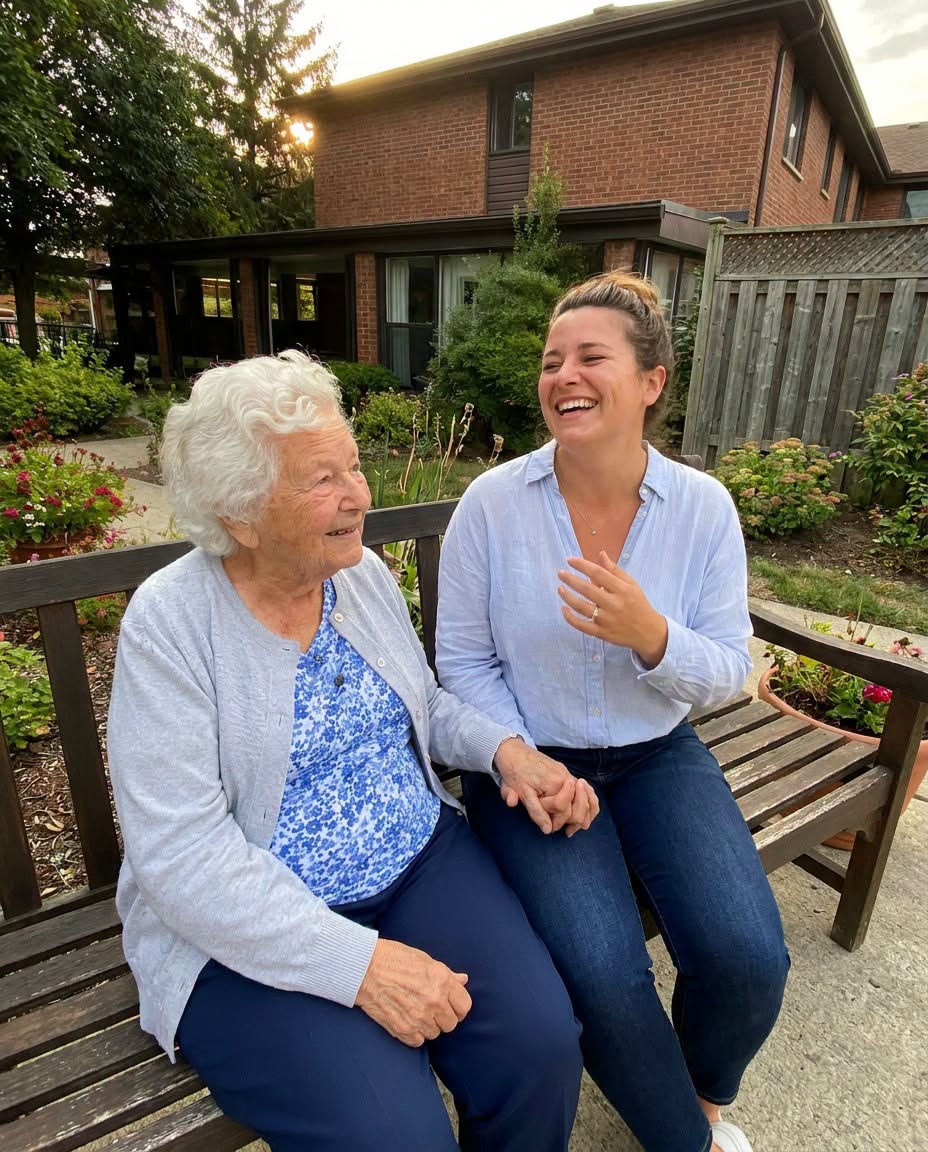
In our family, silence was not empty — it was heavy, sharp, and always sitting between my mother and grandmother like an uninvited guest. While other families passed down recipes, holiday stories, or funny traditions, ours passed down careful pauses and unfinished conversations. My mother, Daisy, could sit across from my grandmother, Clover, for an entire Christmas dinner and barely say more than a few polite words. Whenever I asked why, Mom always gave the same answer: “Some things can never be forgiven, Amber.” I spent years believing Grandma must have done something cruel, something unforgivable. Then, after Grandma had a stroke and I found a hidden music box in the back of her closet, I finally learned the truth — and it was far more heartbreaking than anything I had imagined.
The strange part was that Grandma had always been loving to me. She remembered my favorite shortbread, came to school plays, helped raise my brother Gabriel and me when Mom worked long hours, and somehow always knew when to sit beside me without forcing me to talk. She was warm, patient, and present in every way that mattered. But every time she showed up for us, I noticed something tighten in my mother. It wasn’t simple jealousy. It was older than that, buried deeper. Holiday dinners could turn cold after one small comment or one look, and soon someone would leave the room while the rest of us pretended nothing had happened. I built theories for years, but none of them came close to the truth.
After Grandma’s mild stroke, the doctors said she was still herself, but she could no longer live safely alone. I assumed she would move in with us, but Mom refused immediately. “She needs to be far away from this family,” she said. The words stayed with me, so when I went to Grandma’s house to pack her belongings, I searched carefully through drawers, closets, and old boxes. In the back of her bedroom closet, behind storage containers, I found a small wooden music box with a faded floral pattern. Inside was a folded paper listing names and birthdays — all the grandchildren, including mine and Gabriel’s. But next to Gabriel’s birthday, where his name should have been, Grandma had written a different name: Michael. When I showed the paper to Mom, her face changed with fear, and she snapped that Grandma was confused. But I knew she wasn’t.
The next morning, I took the music box to Grandma at the nursing home. When she saw it, her eyes filled with tears, and she said, “Now you’ll finally understand why your mother hates me.” Then she told me the story no one had ever told me before. Michael was my mother’s first child, born before me, before Gabriel, before the family I thought I understood. Mom had been young, overwhelmed, and trying to build a life with Dad while Grandma stepped in to help. For a few years, they were a small family centered around that little boy. Then Michael became seriously ill. The adults argued over doctors, treatments, and impossible choices made out of fear and love. They followed a plan Grandma had supported, hoping it would help, but Michael passed away before his fourth birthday. Mom’s grief needed somewhere to go, and Grandma let herself become the person Mom blamed.
When I confronted Mom with Michael’s name, the truth came out slowly, in broken pieces. She admitted she no longer knew if it had really been Grandma’s fault, or if she had only needed someone to hold responsible because accepting that no one could save him was too painful. A few days later, I brought her the music box. She opened it herself and read the list in Grandma’s careful handwriting — every grandchild, every birthday, every small note, and Michael’s name still there, never crossed out, never forgotten. For most of my life, I thought my mother hated her mother because of something cruel Grandma had done. But the truth was sadder. They were two women grieving the same little boy, both trapped for years by blame, guilt, and a love that had not been enough to change what happened.