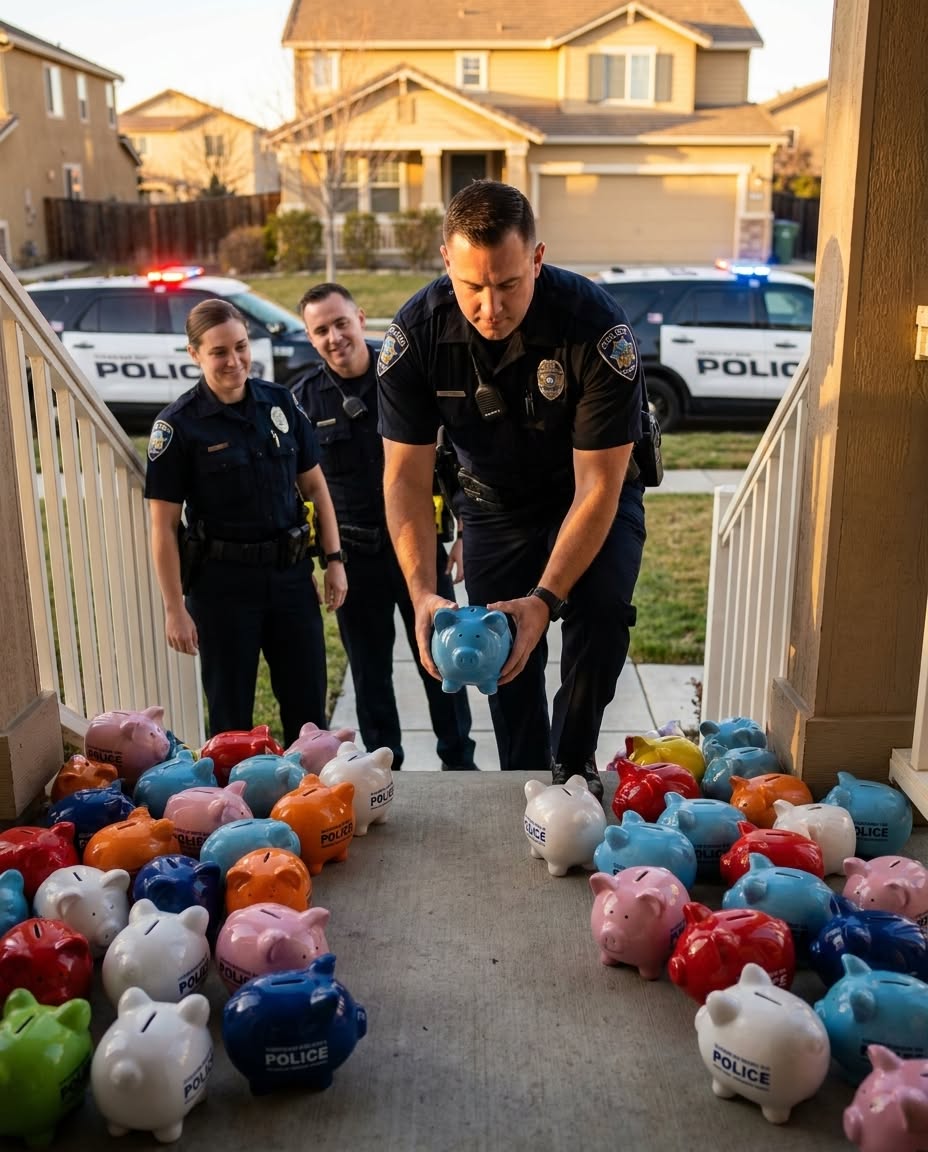
The knocking started just after sunrise, loud enough to pull me out of bed before my alarm. I thought maybe it was our elderly neighbor, Mrs. Adele, finally asking for help after spending several nights alone in a dark, freezing house. But when I opened the front door, I froze. Two patrol cars blocked the street, neighbors crowded the sidewalks, and our entire front yard was covered in piggy banks. Big ones, tiny ones, painted ones, cracked ceramic ones, and faded plastic ones stretched from the porch steps all the way to the curb. Standing at the door was a police officer holding a small red piggy bank in both hands. Behind me, my six-year-old son Oliver peeked around my robe in his race car pajamas and whispered nervously, “Mom… did I do something bad?” The officer looked down at him gently before answering, “No, son. Actually, you may have reminded this town of something very important.”
It had started a few days earlier when Oliver noticed something most adults overlooked. Mrs. Adele, the retired cafeteria worker who lived across the street, had stopped turning on her porch light at night. To most people, it probably seemed unimportant. But Oliver noticed because she always switched it on whenever I called him home for dinner. When we finally checked on her, we discovered her electricity had been shut off after an expired payment card caused problems with her automatic bill payments. Mrs. Adele tried to pretend everything was fine, sitting quietly in her cold house wearing her winter coat indoors, insisting she didn’t want to bother anyone. But Oliver disappeared into his bedroom, came back carrying his green piggy bank, and offered her every dollar he had saved from birthdays, chores, and the tooth fairy. “You need it more than me,” he told her seriously. Mrs. Adele tried to refuse, but Oliver insisted. Watching that moment broke something open in all of us. I helped contact local services that night, but I thought the story ended there. I had no idea what Oliver’s small act of kindness was about to start.
After I posted online asking for advice about senior assistance programs, neighbors began recognizing Mrs. Adele’s name. One by one, people remembered the quiet ways she had helped them years earlier while working at the elementary school cafeteria. The piggy banks scattered across our lawn the next morning weren’t random donations — each one carried a story. Inside were handwritten notes, gift cards, business cards, grocery vouchers, repair offers, and promises of help. One woman wrote that Mrs. Adele secretly paid for her school lunches every Friday when her family struggled financially. A contractor promised to repair anything in her house for free because she once packed him extra breakfasts before exams. Another man remembered how she quietly slipped food into his backpack when his mother worked double shifts. Even Officer Hayes revealed that, as a child, Mrs. Adele had once given him cafeteria tokens so he could eat without feeling embarrassed. Suddenly, our quiet neighborhood street transformed into something emotional and unforgettable as dozens of adults stood there realizing the elderly woman they barely noticed had spent decades quietly taking care of their children.