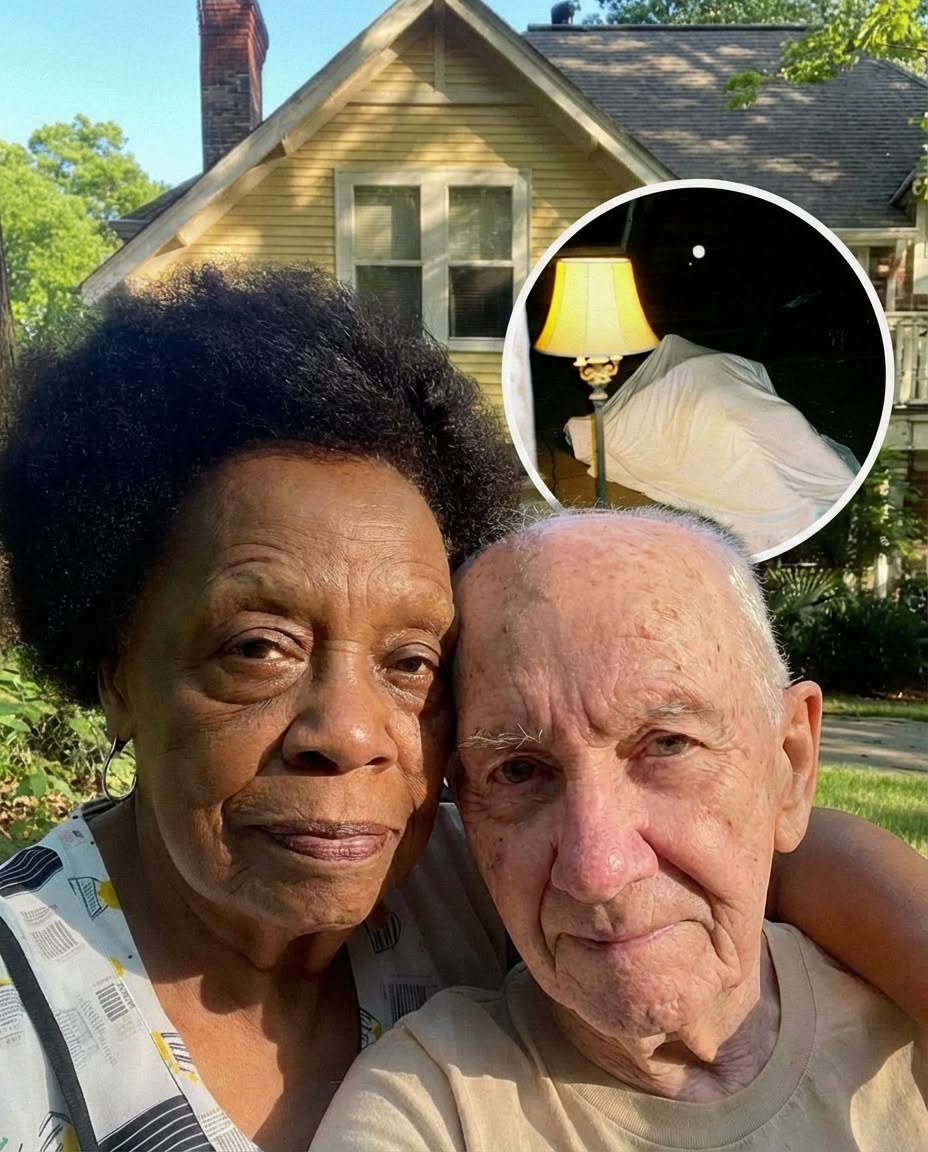
I’m not the kind of man who puts his life on the internet. I’m 76, retired Navy, and I’ve spent most of my years believing some doors stay closed because the people you love ask you to trust them. But two weeks ago, with my wife in rehab after a bad fall, our quiet Vermont house started making sounds that didn’t feel like settling wood or winter wind. Every night, the same slow scratching above the kitchen—right under the attic she’d kept padlocked for more than five decades. Curiosity turned into dread, and by midnight one sleepless night, I did the one thing I’d promised myself I’d never do: I broke the lock.
Up there, it looked just like she always said—dusty boxes, old sheets, forgotten furniture. Then my flashlight caught a heavy oak trunk in the far corner, locked with an even bigger padlock. The next day at the care facility, I asked Martha about it as gently as I could, expecting annoyance. Instead, her face drained of color, her hands shook, and she whispered, “Tell me you didn’t open it.” That fear told me the truth before the truth even had words. That night, I returned with bolt cutters, snapped the trunk open, and found hundreds of letters tied with faded ribbons—dated from the year we married through the late ’70s—each one addressed to my wife, each one signed by a man named Daniel.
The letters weren’t about “old junk.” They were about a child. Over and over, Daniel wrote about “our son,” about watching him grow from a distance, about waiting for the right time. And then I saw the name: James—my firstborn, the boy I’d raised, coached, and loved like my own heartbeat. When I confronted Martha, she finally told me what she’d buried for 52 years: before she met me, she was engaged to Daniel, who was drafted overseas. She found out she was pregnant, then got word he was missing and presumed dead. We met soon after, and I believed James was born early. He wasn’t. He was born right on time—just not from the father I thought.
I thought that would be the end of the shock, until I read the later letters. Daniel hadn’t died—he’d survived, returned years later, and chose not to destroy the family Martha had built. He lived nearby, watching from the sidelines, leaving proof of his love in ink and silence. When I tracked down the address mentioned in one letter, I learned he’d passed away just days before—right around the time the attic noises began. And when I finally brought what Daniel left behind to James—a medal, a diary, and a photo that made the resemblance impossible to ignore—my son’s hands started shaking. Then he admitted he’d known since he was 16, asked to keep it secret “so no one got hurt.” Now I’m left holding two truths at once: I was deceived, and I was also chosen—because fatherhood isn’t only blood. It’s the years you show up, the love you give, and the family you protect… even when the truth arrives far too late.