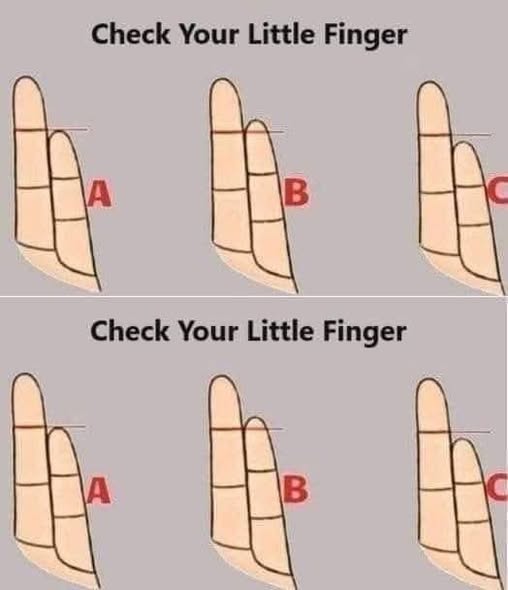
Have you ever looked at your little finger and wondered if something so small could carry a deeper meaning? For centuries, people around the world have been fascinated by the idea that everyday physical traits might reflect aspects of personality and identity. Among these traits, the little finger has inspired countless interpretations, stories, and traditions. While modern science does not support the idea that finger shape or length can determine who we are, these symbolic beliefs continue to capture attention because they encourage self-reflection. Rather than offering answers, they invite us to think about ourselves in new ways and appreciate qualities we may not always notice.
At first glance, the little finger seems insignificant compared to the rest of the hand. Yet it quietly contributes to balance, grip strength, and coordination every day. Because of its subtle but important role, many traditions began connecting it with communication, confidence, and self-expression. In some interpretations, a longer little finger symbolized a person who felt comfortable sharing ideas, building relationships, and engaging with others. These descriptions were never intended as facts but as metaphors that helped explain different ways people interact with the world. The symbolism suggests that openness, enthusiasm, and social ease are valuable qualities that can strengthen personal connections and create opportunities for growth.
Not every tradition focused on outgoing personalities, however. Some associated a shorter little finger with quieter but equally meaningful strengths. In these stories, such individuals were often described as thoughtful observers who preferred actions over words. They were seen as dependable friends, loyal family members, and steady sources of support during difficult moments. Instead of seeking recognition, they made a lasting impact through patience, kindness, and reliability. These symbolic interpretations remind us that strength comes in many forms. Sometimes the people who speak the least are the ones who provide the greatest sense of comfort and stability when others need it most.
The fascination does not stop with length alone. Some traditions even considered the natural position of the little finger when the hand is relaxed. A loose and relaxed posture was often linked to adaptability, while a straighter position symbolized focus and determination. A slight inward curve was sometimes associated with sensitivity and a caring nature. Whether or not these ideas hold any truth is not the point. Their lasting appeal comes from the questions they encourage us to ask about ourselves. And that may be the most interesting revelation of all: the little finger is not really about predicting personality. Instead, it serves as a simple reminder that even the smallest details can inspire reflection, helping us recognize the unique qualities that shape who we are and how we connect with the people around us.