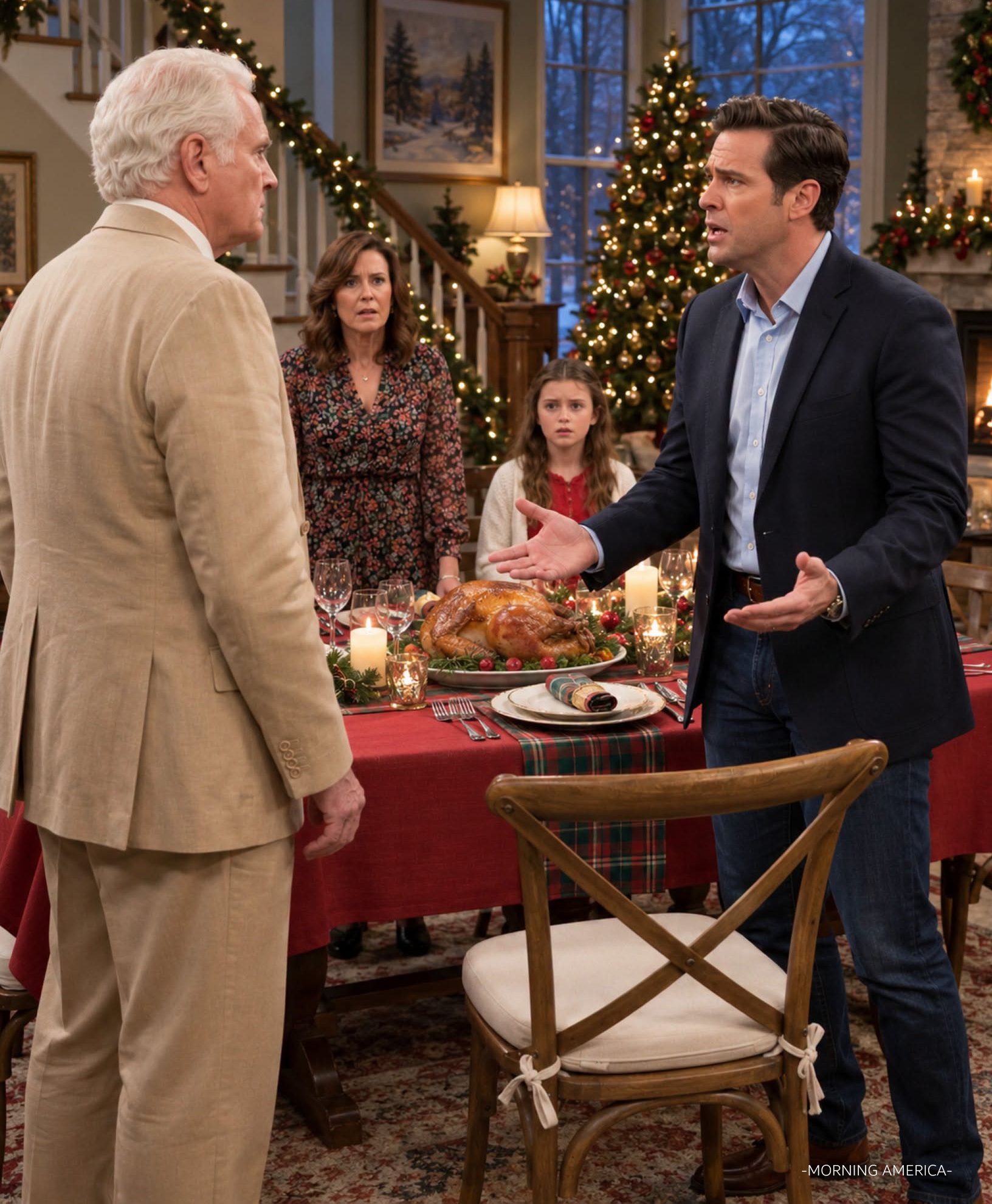
Michael slammed both hands on the Christmas table, rattling my late wife’s china. “You’re not invited,” he said as I pulled out a chair. Turkey and sage filled the room; I had been cooking since five that morning. My daughter, Amanda, stared at her plate. Three years earlier, I had welcomed them home after his company, Sterling Construction, collapsed. Their temporary stay had stretched into years, and my help had included a $45,000 check. Now he was ordering me away from the dinner I had prepared.
Earlier, Michael had introduced me to his guests as someone “staying with us for the holidays.”I had swallowed that insult, but my granddaughter Jenny noticed. Now, watching her father point me toward the kitchen, I realized she was waiting to see what I would do. I left my chair and walked toward the front door. Michael looked pleased. He misunderstood why I was opening it.
I held the door open and told the guests dinner was over. Then I reminded Michael that I had bought this house in 1998 and finished paying the mortgage in 2011. His expression changed before anyone reached for a coat. The confrontation ended with police at the house and my daughter’s family leaving, but the dispute continued for months. I hired an attorney, Robert Morrison, and opened the files I had kept from the beginning. Years in insurance had taught me to save receipts, canceled checks, and promises made in writing. Michael’s failed business investment had cost me far more than that first check: bankruptcy expenses and additional household bills brought my documented support to roughly $78,000. When he challenged my ownership in court, the most telling evidence came from Amanda herself. In an old she email, had thanked me for letting them stay in my house.
His claim was dismissed. Later, I obtained a $78,000 judgment, although recovering money would take considerably longer than hearing the ruling. By then, Amanda’s marriage had ended, and she was working retail. When she finally visited, she sat across from me and apologized without asking for a check or a room. She admitted that she had watched Michael humiliate me and chosen silence because speaking up would have made her own life harder. I believed her apology; I simply wasn’t ready to act as though nothing had happened. We began talking again, cautiously. Jenny stayed in touch, and Harold, my neighbor, kept coming over for chess. One evening, after he left, I carried my tea into the dining room. I sat in the chair I had reached for that Christmas and stayed there until the tea was cold.