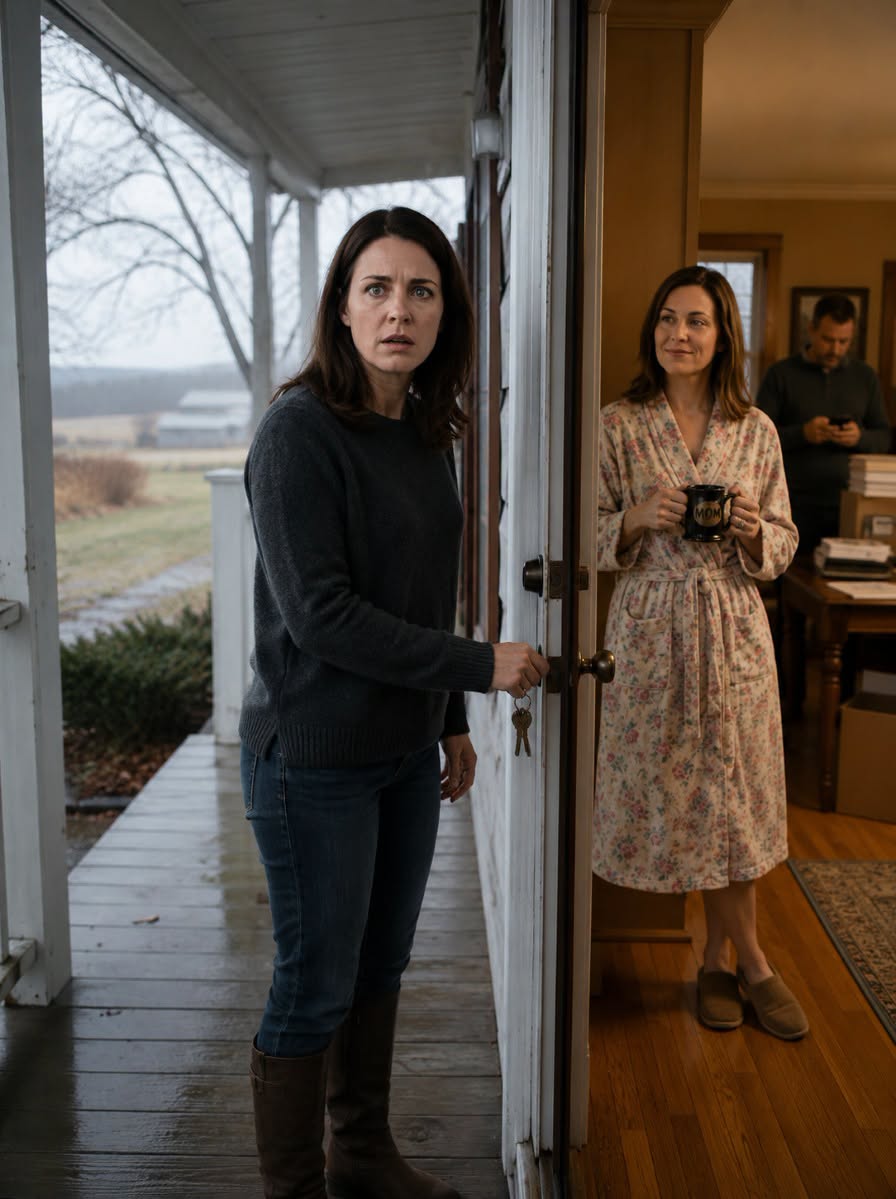
Six days after we buried Mom and Dad, my sister Brenda changed the locks on the Virginia farmhouse where I had lived for 33 years. Wearing Mom’s robe and holding her coffee mug, she told me the house, the 250-acre farm, and “all $28 million” were hers. I’m Cecilia Everett, 33, an accountant who had spent a decade managing the farm’s books, contracts, equipment costs, and insurance premiums. Brenda had been gone for 20 years, usually calling only when she needed money. Now she was back with her ex-husband Derek, already talking to realtors about a $22 million sale. I moved into the apartment above the equipment shed, gathered my ledgers, and waited for attorney Tom Beckett to read the will.Family
The night before the meeting, I found a letter in Mom’s handwriting beneath the cot. She warned that Brenda would try to take everything and told me to let the papers do the talking. The next morning, Brenda arrived certain she had won. Part One gave her the farmhouse and $280,000, but only if she lived there for five years. When she demanded the missing millions, Tom pulled out a second sealed envelope. My parents had created another legal document seven years earlier—and Brenda had never known it existed.
Inside was the Everett Family Irrevocable Trust, holding the farm, equipment, mineral rights, cooperative shares, and a $2.1 million educational fund—about $27.5 million in assets. The trustee had to have lived on the property for five years, kept verifiable financial records, and participated in the local agricultural community. I met every condition, and my parents named me directly. Brenda threatened court, while Derek admitted they had already lined up the $22 million development deal. Tom warned that trying to sell estate property without authority could create serious legal trouble, and Derek soon needed his own attorney. My records covering insurance, taxes, investment obligations, equipment financing, and mortgage-related paperwork mattered more than Brenda’s assumptions about birth order. My parents’ letter made the point simple: Brenda had a chance to come home; I had responsibility for protecting the farm and its community.
Three months later, Brenda had lasted only two weeks in the farmhouse before returning to Richmond, and I began the reversion process. The educational fund issued three $15,000 scholarships, which I signed at Mom’s kitchen table after moving home and changing the lock one final time. Brenda later called to ask whether she could get more money, but I told her the trust was not ours to spend—it was mine to manage. I reminded her the door remained open if she wanted to return for the farm instead of the fortune. She hung up. Standing on the porch afterward, looking across the orchard toward the Blue Ridge, I finally understood what my parents had left me: not simply $27.5 million, but proof that years of quiet work had been seen.