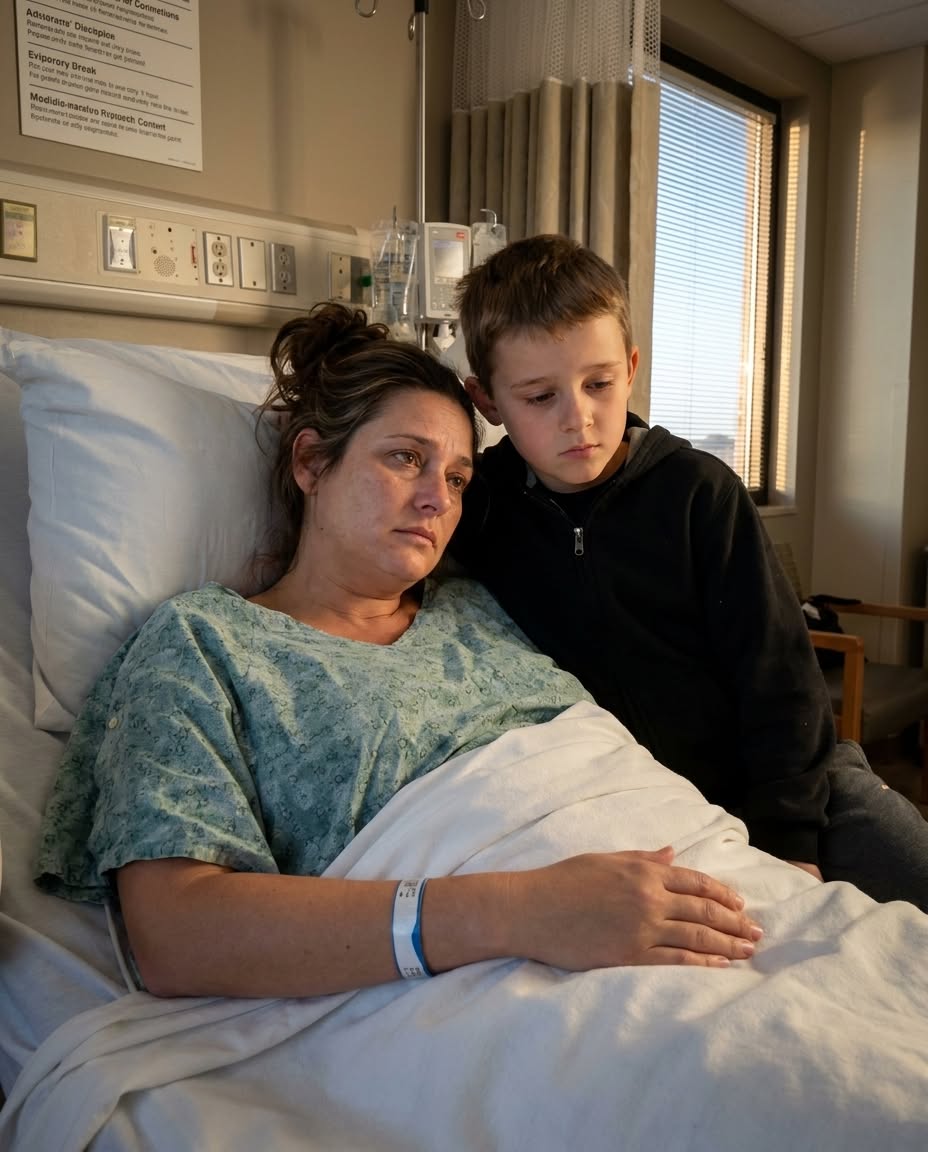
“Mom, she’s not gone.” My eight-year-old son Willie whispered those words while I stood in his bedroom holding a glass jar stuffed with coins, crumpled bills and even the $50 his grandmother had given him for his birthday. For two weeks, I had assumed he was grieving Claudia, the little sister he had spent months talking to through my stomach before she died during a complicated delivery. Now I had caught him adding his lunch money to a jar that seemed to grow every day. When I gently told him Claudia was with God and that no amount of money could bring someone back, his face tightened. “Then why did Daddy use money?” he asked. I sat down so quickly the mattress dipped beneath me. Willie looked toward the bedroom door before explaining that while I was unconscious at the hospital, he had followed his father near the elevators and watched Robert hand a woman a thick envelope filled with cash—then watched that same woman walk away carrying a crying baby. “If I save enough,” my son whispered, “maybe we can get Claudia back.”
The woman Willie had seen was Robert’s younger sister, Claire. Her own daughter, Ivy, had been born only weeks before Claudia was due, and our families had spent months joking that the cousins would grow up together. When I confronted Robert, he admitted giving Claire money because she was struggling through a separation and needed help with rent and groceries; Claire had brought Ivy to the hospital because she had nobody else to watch her. Willie, frightened and only eight, had connected two unrelated events—the envelope of money and his aunt leaving with a newborn—and concluded that his father had somehow paid Claire to take his sister. But another detail bothered me. Willie had also seen Robert touch the baby, and Robert reluctantly admitted that he had held Ivy because hearing her cry after losing Claudia had broken something open inside him. Claire confirmed it when I drove to her house. She told me Robert had held Ivy and sobbed, repeating Claudia’s name and saying the two girls were supposed to grow up together. I understood his grief, but Claire still would not meet my eyes. When I demanded to know what else everyone had decided I was too fragile to hear, she finally whispered, “Ask Robert if he said goodbye to Claudia.”
Fifteen minutes later, I was standing in our kitchen asking my husband whether he had held our daughter after she died. Robert froze before admitting that while I was still in surgery, hospital staff had offered him the opportunity to see Claudia and he had held her for approximately twenty minutes. He described her tiny face—my mouth, the shape of my eyes—and told me he could not bear the thought of her leaving the hospital without either parent ever holding her. That part devastated me, but I understood it. What came next was harder. When I woke after surgery and asked whether Claudia was already gone, Robert had told me yes; what he had never explained was that I still could have seen her and said goodbye. He had decided that seeing our daughter would destroy me, so he made the decision on my behalf. Then I asked whether the hospital had given him anything to remember her by. After another long silence, Robert went upstairs and returned carrying a small envelope he had secretly opened every night for two weeks. Inside was a hospital keepsake card bearing two impossibly tiny footprints. I ran my finger over one of them and realized that while I had been struggling to remember whether my daughter had ever made a sound, my husband had possessed something tangible that proved she had been here all along.
I told Robert I could understand why he held Claudia while I was in surgery and why, overwhelmed by grief, he had briefly held his newborn niece. What I could not immediately forgive was everything he chose after I woke up: withholding my opportunity to see our daughter, hiding her keepsake and deciding which parts of our loss I was emotionally capable of surviving. In grief and bereavement care, families may be offered memory-making opportunities—such as photographs, footprints or time with the baby—and those choices can carry enormous emotional significance; in our case, Robert had made one of those deeply personal decisions without me. Yet anger did not erase the fact that he had lost Claudia too, nor did it excuse how completely both of us had missed Willie’s suffering. Our son had spent two weeks sacrificing birthday money and lunch money because he genuinely believed his sister was alive and could be brought home for the right price. That evening, Robert and I sat on either side of him and explained everything in language he could understand: Aunt Claire’s baby was Ivy; the money Robert gave Claire was simply financial help; Claudia had died at the hospital and could not come back. “So I can’t get her back?” Willie asked. I held his hand and said no. He cried between us, Robert wrapped his arms around both of us, and for once none of us tried to protect anyone else from being devastated. We simply allowed ourselves to be.
A week later, Robert and I sat outside our first grief-counseling appointment, neither of us pretending that understanding his choices had magically repaired the trust between us. Before we went inside, he asked if I was ready. “No,” I told him, taking his hand, “and neither are you. Maybe we can stop pretending we have to be.” That evening I walked past Claudia’s nursery, as I had every day since returning from the hospital, but this time I opened the door. The pale yellow walls, untouched crib and stuffed rabbit Willie had chosen for his sister were exactly where we had left them. My chest tightened, but I stepped inside and placed Claudia’s footprint card beside the rabbit. Willie appeared behind me carrying the money jar he no longer needed and quietly asked whether Claudia could still keep the toy. “Yes,” I said. “She can.” He slipped his hand into mine, and when we finally left the room together, I did something I had not been able to do for two weeks: I left the nursery door open.