Five days after Lawrence Beaumont’s funeral, I opened a plain envelope at my kitchen table and read one sentence that made me put down my coffee: “You left food at my door for years. Now look inside the old freezer in your basement.” Lawrence had lived next door for the nine years since my divorce, long enough to watch my children grow, long enough for occasional soup and pharmacy runs to become part of the rhythm of our lives. The freezer he mentioned had been in my basement since the day I bought the house, an old upright model I had never thought much about. I went downstairs, opened it and moved aside frozen vegetables and containers of soup until I saw something I had definitely never put there. On the bottom shelf sat a locked fireproof metal box. A strip of masking tape on top carried three numbers in Lawrence’s handwriting—the combination.
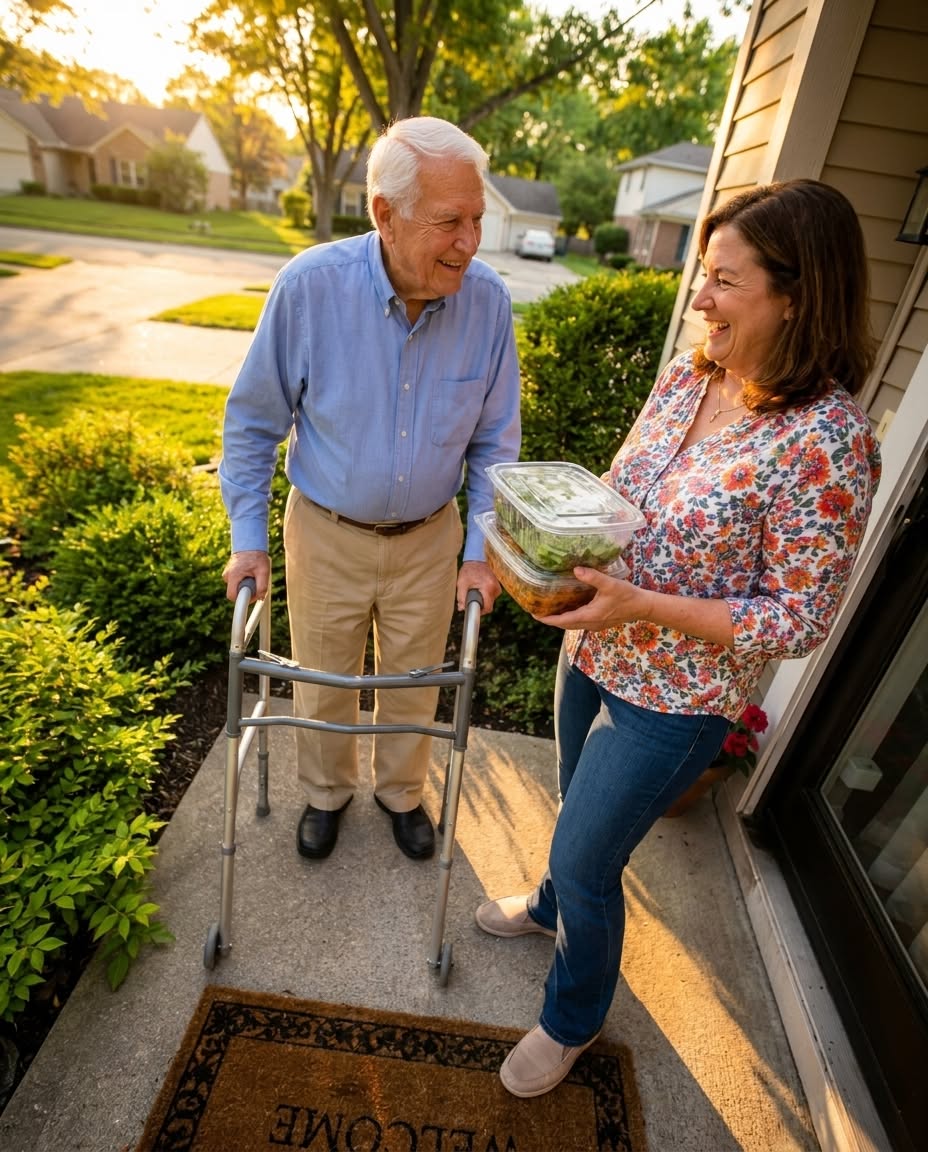
I had met Lawrence when I was forty-eight, freshly divorced and moving into the house next door with my fifteen-year-old daughter Sophie and twelve-year-old son James. He was eighty-one then, a retired civil engineer whose wife Dorothy had died six years earlier and whose estranged son Robert had stopped answering his letters. Our friendship began with coffee on my porch steps and grew almost accidentally. When Lawrence came down with the flu during our first winter as neighbors, I picked up his prescription and brought him chicken-and-vegetable soup. After that, I simply kept making an extra portion when I cooked. Over the years I added groceries, medical appointments and occasional pharmacy trips as cataracts, a hip replacement and age made certain errands harder. Lawrence tried to pay me in the beginning; I always refused. To me it was never caregiving in the formal sense and certainly never a transaction. He was my neighbor, then my friend, and I could not stand the thought of someone I cared about becoming isolated simply because getting older had made ordinary life more difficult.
Inside the metal box was a note instructing me to call Lawrence’s attorney before touching anything else. The next morning, attorney Daniel Marsh told me what Lawrence had quietly been doing for almost the entire length of our friendship. He had a municipal pension from forty years of engineering work, Social Security and a modest lifestyle that left him with money each month. One year after I began regularly bringing meals, he started saving the surplus. He did it month after month for eight more years. His house was to be sold after his death, with most proceeds funding the Dorothy Beaumont Education Fund, a scholarship program honoring his late wife’s thirty years as a teacher. His books would go to the library and personal effects to old colleagues. But the savings accumulated separately were for me. Lawrence had even arranged years earlier for the freezer—his freezer, originally purchased with Dorothy in 1987—to remain in the basement when the previous owner sold my house. He knew I would never accept money while he was alive, so he created a bequest I could only discover after refusing him was no longer possible.
I immediately started arguing. Daniel smiled because Lawrence had predicted that too. Then he read me instructions Lawrence had left specifically for that moment: the money had belonged to him, Lawrence said, and he had every right to decide where it went. He reminded me that he and Dorothy never had grandchildren and that watching Sophie and James grow up next door had given him something he had never expected to experience. Most importantly, he insisted the money was not payment. Payment would have turned nine years of friendship into a ledger of services rendered and debts settled. This was gratitude. The documents had been structured as part of his estate plan, while his house and other assets were distributed separately according to his instructions. Lawrence had even written that if I continued protesting, Daniel should tell me he had already “asked Dorothy” and she agreed, so the matter was closed. By then I was crying too hard to keep arguing. Later, inside the box, I found an old photograph of Lawrence and Dorothy laughing together in 1968. On the back he had written only: “She would have liked you.”
Months later, I joined the selection committee for the scholarship fund bearing Dorothy’s name. The house next door sold to a young couple with a seven-month-old baby, and after giving them time to settle, I baked a pie and introduced myself. Eventually I started bringing them extra portions of dinner too, simply because I had never really learned how to cook for exactly the number of people at my own table. One evening the new neighbor laughed and said they were going to owe me so much. I told her they owed me nothing. When she asked how that was supposed to work, I finally understood what Lawrence had spent nine years teaching me from the other side of the fence. Someone does something for you because they can and because you need it. Later, when you can, you do something for somebody else. That is all. I learned it from an old man who carefully saved a little money each month while I carried soup next door, and who somehow found a way to keep the kindness moving even after he was gone.