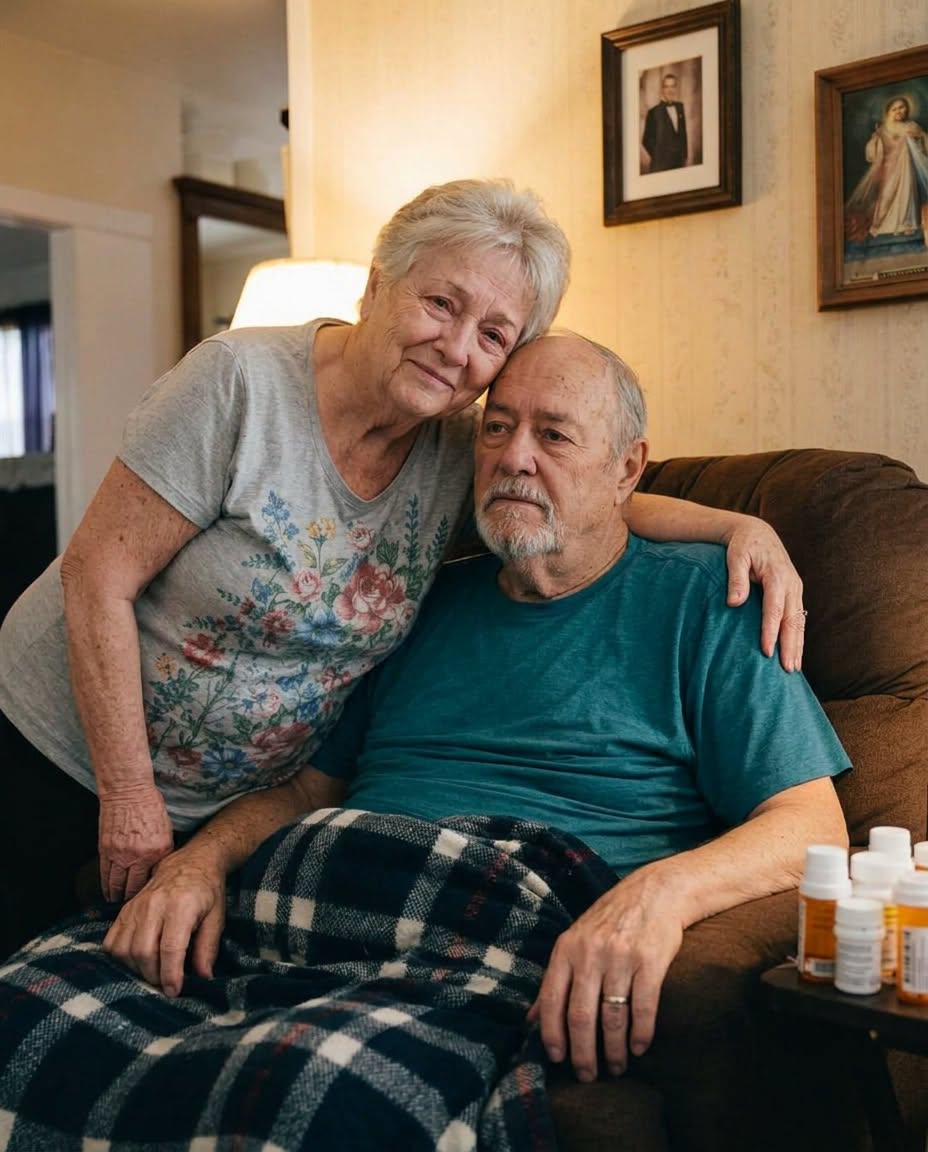
David was asleep when I opened his nightstand drawer looking for the old Seiko watch he had worn since 1972. The February light was flat and gray across our bedroom, the same room we had shared for more than four decades, and I was trying to decide what belonged in the suitcase I had not yet told him I was packing. Two days earlier, after finding him on the floor beside the bed, I had finally admitted to our daughter Karen that I could no longer care for him alone. I had toured a skilled nursing facility, chosen a room and nearly convinced myself that moving him there was the only responsible decision left. Then I saw the cream-colored envelope tucked behind the drawer. My name was written across the front in David’s unmistakable handwriting. Underneath it were the words: For Linda, if the day ever comes when she can’t take care of me anymore.
David and I had met in an Akron hardware store in 1978 when he helped me
choose weatherstripping for a drafty apartment door, and from then on, fixing
things became one of the languages of our marriage. He repaired furnaces,
windows, fences and appliances, carried every heavy grocery bag he could
reach first, and spent forty-four years quietly solving practical problems before
they became larger ones. Then, after his sixty-seventh birthday, his heart began
failing, followed by kidney disease and the complications that come when one
weakened system begins placing demands on another. Over nearly two years,
the man who had always been the helper became dependent on me for
dressing, standing, medication and basic daily care. I slept four or five hours a
night, stopped seeing friends, lost twelve pounds and sometimes reached late
afternoon before realizing I had not eaten. I kept telling Karen and everyone else
that we were managing. My body disagreed. When David fell beside the bed one
Tuesday morning and I locked myself in the bathroom to cry into a towel so he
would not hear me, the fiction finally collapsed.
The letter had been written in 2019, three years before David became ill. He
explained that he had watched his brother Gerald’s wife disappear inside the
work of caregiving and had promised himself that if something similar ever
happened to us, he would not allow love to consume the person doing the loving.
He told me there was no version of caring for him that required me to stop caring
for myself. If the day came when professionals could care for him better than I
could alone, choosing that help would not be failure. Then, because he was
David, the letter became practical. He listed our savings and retirement
accounts, the name of our financial adviser, and his belief that professional care
could be paid for without forcing me to sell the house. He told me to let Karen
help. He reminded me that forty-four years together were already more than
enough and that he would rather spend whatever time remained being properly
cared for than watch me disappear beside him. His final line brought me back to
the hardware aisle where we had first met: “You were the medium density
weatherstripping. The right fit. I knew from the hardware store.” Sitting on the
floor beside his bed, I realized he had understood the crisis years before I was
willing to admit it could exist.
Karen read the letter that afternoon and revealed that David had prepared even more than I knew. He had added her as a secondary financial contact in 2020 and asked her to watch for the point when I could no longer manage alone. She had already researched certified home-health aides who could work four- and eight-hour shifts six days a week, and our financial adviser confirmed that the cost was sustainable. That changed the decision entirely. David did not have to move immediately into a facility, and I did not have to continue functioning as a full-time caregiver without support. We arranged alternating aides named Marcus and Sue, professionals trained to assist with mobility, personal care and the physical demands that had been exhausting me. When I finally told David about the nursing home tour and the letter, he admitted he had been waiting for me to find it. He wanted to stay in the house, but he also said he did not want to become the reason I vanished from my own life. By the end of the first week with home care, I slept seven uninterrupted hours, ate breakfast at the kitchen table and read the newspaper for the first time in months. David, meanwhile, was already telling Marcus the history of every wall and window he had repaired.
One evening, after everyone had gone home, I opened the nightstand again and reread the letter when I was no longer sitting on the floor in desperation. David’s watch rested beside it, newly repaired, its scratched crystal replaced so the hands could be seen clearly again. That small repair felt like us: not restored to what we had been, but adjusted carefully enough to keep moving. Karen would come back. The aides would return in the morning. I would eat, sleep, read and allow other people to carry some of what I had insisted on carrying alone. David would remain in the house he loved for as long as that arrangement remained safe and workable. Forty-four years earlier, he had seen me standing uncertainly in a hardware aisle and offered a practical answer to a problem I did not know how to solve. Decades later, when illness had made the problem infinitely larger, he had done the same thing again. He simply left the answer where he knew I would eventually find it.