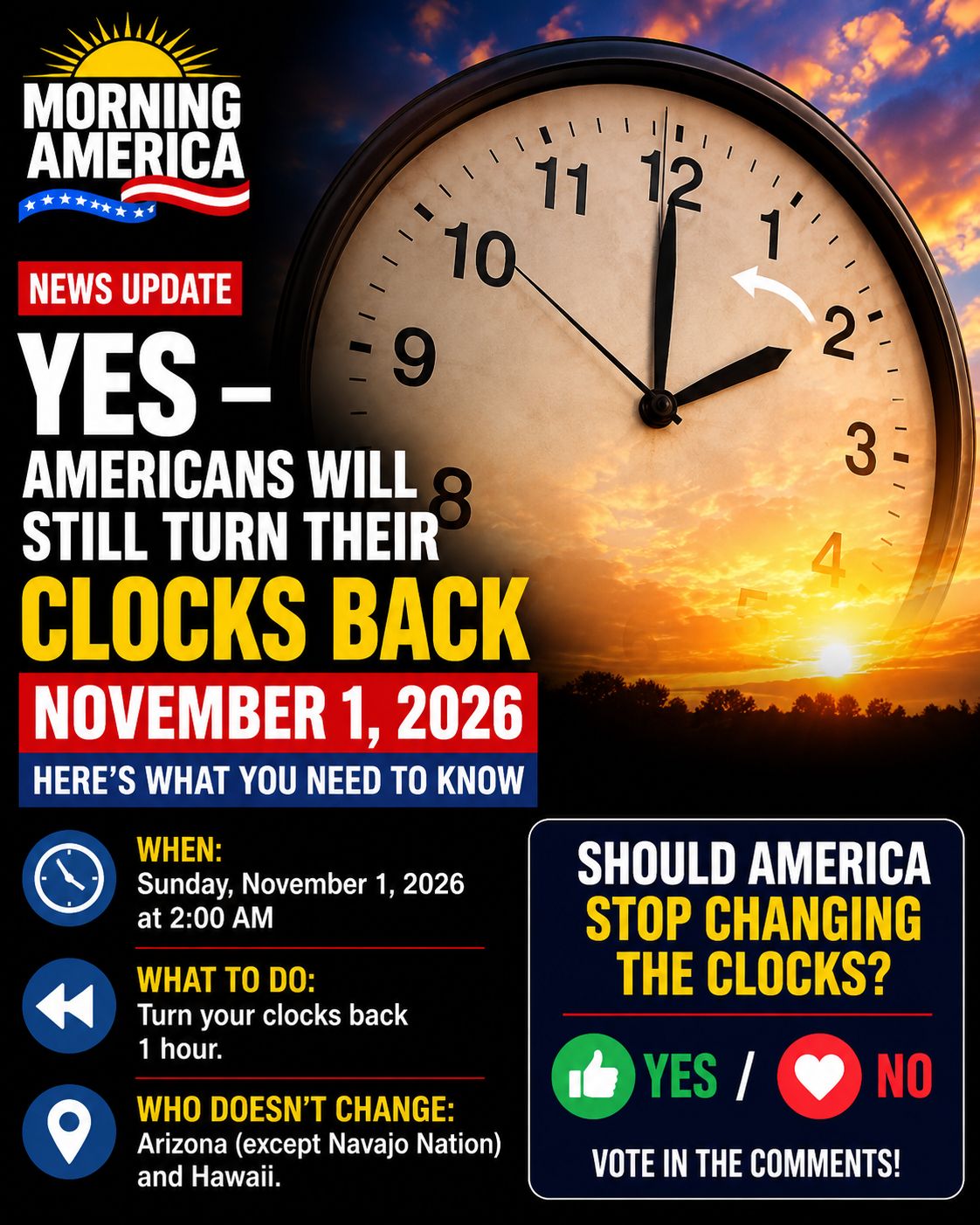
Will Americans Still Turn Their Clocks Back in November 2026? Here’s the Latest
If you’ve been wondering whether Americans will still have to change their clocks this fall, you’re certainly not alone.
The twice-a-year clock change has been debated for years, with many Americans calling for the practice to end.
But as things currently stand, most of the United States is still scheduled to “fall back” on Sunday, November 1, 2026.
That means clocks will move backward by one hour when Daylight Saving Time ends.
For millions of Americans, it will once again mean an extra hour on the clock — followed by noticeably earlier sunsets.
When Do Clocks Fall Back in 2026?
Daylight Saving Time is scheduled to end on Sunday, November 1, 2026.
At 2:00 a.m. local daylight time, clocks move backward one hour to 1:00 a.m. local standard time in participating areas.
It’s the change generations of Americans have remembered with the familiar phrase:
“Spring forward, fall back.”
In March, clocks move forward.
In November, they move backward.
Although smartphones, computers and many smart devices usually update themselves automatically, some household clocks still need to be adjusted manually.
That includes clocks in some vehicles, ovens, microwaves, alarm clocks and traditional watches.
Does Every State Change Its Clocks?
No.
Hawaii and most of Arizona do not observe Daylight Saving Time, so residents there don’t participate in the twice-yearly clock change.
There is an important exception within Arizona: the Navajo Nation observes Daylight Saving Time.
Elsewhere, most Americans will experience the November transition.
Why Are We Still Changing The Clocks?
That’s the question many Americans continue to ask.
Changing the clocks has been part of American life for generations, but whether the system still makes sense today remains the subject of significant debate.
Some people enjoy having more evening daylight during Daylight Saving Time.
Others would prefer standard time throughout the year.
And plenty of Americans don’t care which one is selected — they simply want the country to stop changing the clocks twice every year.
Congress Has Debated The Issue
Washington has repeatedly considered proposals that could change the current system.
Perhaps the most recognizable proposal in recent years has been the Sunshine Protection Act, which has sought to make Daylight Saving Time permanent.
The issue has generated considerable public attention.
However, introducing or even advancing legislation isn’t the same as changing the law.
Until federal rules actually change, Americans should continue following the existing Daylight Saving Time schedule.
That means another fall clock change remains scheduled for November 2026.
Why Does One Hour Matter So Much?
Moving a clock by only one hour might sound insignificant.
But many people say they notice the difference immediately.
Parents may have to adjust children’s sleeping schedules.
People with pets sometimes discover that their animals aren’t particularly interested in what the clock says when breakfast suddenly appears to be an hour late.
Workers may find themselves commuting home after sunset.
And for some people, the change simply disrupts a routine that took months to establish.
The November transition does have one famous advantage:
You get an extra hour on the clock that night.
But the tradeoff is that sunset arrives an hour earlier by the clock.
The Earlier Sunset Can Be A Big Adjustment
For many Americans, this is the most noticeable part of “falling back.”
One Saturday, daylight may still be hanging around during the late afternoon.
After the clock change, darkness appears to arrive surprisingly early.
As winter approaches and daylight hours naturally become shorter, that difference becomes even more noticeable.
It’s one reason conversations about ending the clock changes return almost every year.
What Should Americans Do Before November 1?
Most modern electronics should make the change automatically.
Still, Saturday night before the transition can be a good time to check devices that may require manual adjustment.
Look at your wall clocks, watches, vehicle clock, microwave, oven and traditional alarm clocks.
If they don’t update automatically, move them back one hour.
Then enjoy the extra hour.
Could America Eventually Stop Changing The Clocks?
Absolutely — federal law can be changed.
But predicting whether or when that will happen is different from saying it already has.
For now, the important point is simple:
Most Americans should expect to turn their clocks back again on November 1, 2026.
Unless the law changes before then, the familiar fall tradition will continue.
And once again, millions of Americans will probably ask the same question:
Why are we still doing this?
Perhaps that’s the more interesting debate.
Some Americans want permanent Daylight Saving Time.
Others prefer permanent standard time.
Others simply want to leave the system exactly as it is.
After decades of clock changes, Americans remain surprisingly divided over what the clock should say.
So now we want to hear from you.
🇺🇸 Should America finally stop changing the clocks twice a year?
👍 YES — Pick one time and keep it year-round.
❤️ NO — Keep the current system.
Share your opinion in the comments.